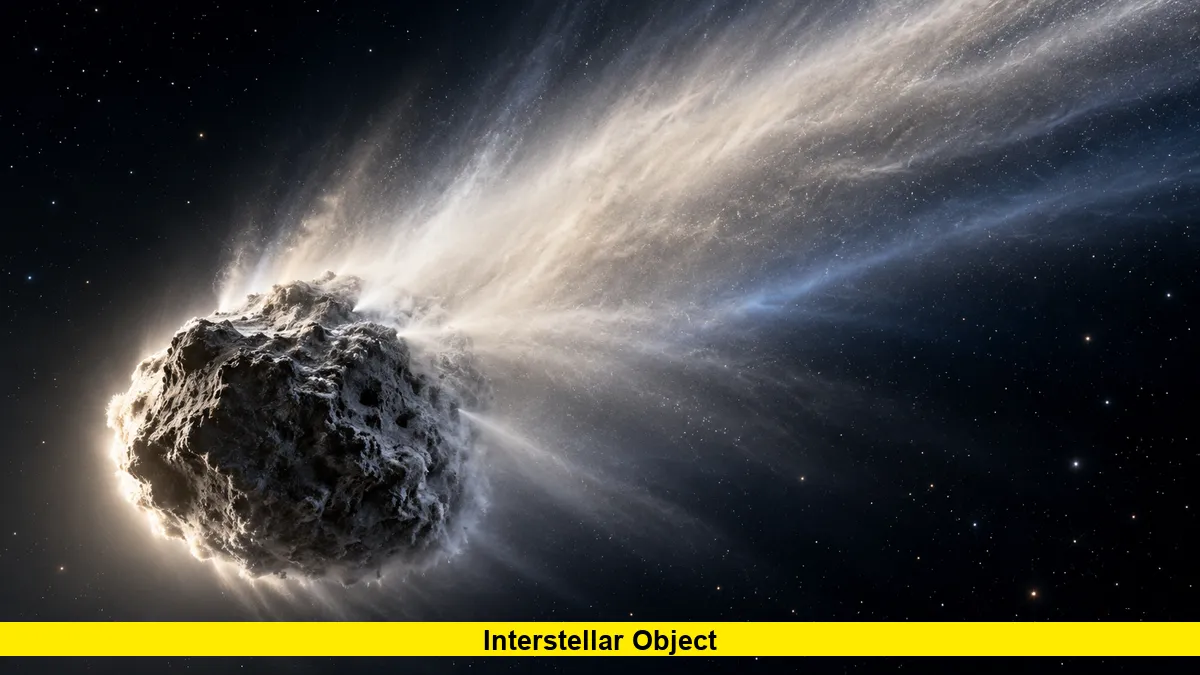
The interstellar object 3I/ATLAS is one of the most scientifically significant visitors ever detected passing through our solar system. Identified in 2025, this object attracted worldwide attention because it originated beyond our solar system and follows a trajectory that distinguishes it from ordinary comets bound to the Sun. Its discovery gave astronomers a rare opportunity to study material formed around another star.
For researchers in the United States and around the world, 3I/ATLAS offers valuable clues about how planetary systems form, how comets behave in different stellar environments, and what interstellar space contains. Its passage has also generated public interest in its unusual appearance, chemical composition, speed, and trajectory.
Understanding the latest developments requires separating confirmed astronomical observations from unproven claims. Scientists have identified 3I/ATLAS as an interstellar object with comet-like activity. Its observed characteristics make it an important target for studying material that originated outside our planetary neighborhood.
Latest Update on Interstellar Object 3I/ATLAS
The latest research on interstellar object 3I/ATLAS continues to reveal important details about its unusual composition, icy particles, and behavior after its closest approach to the Sun. A study announced on October 26, 2026, reported findings from observations made with NASA’s James Webb Space Telescope. Researchers identified tiny aggregates of water ice and dust surrounding the comet, providing new information about the physical properties of material released from its nucleus.
The observed ice grains displayed characteristics that differ from those found in many previously studied solar system comets. These differences could help scientists investigate the conditions under which 3I/ATLAS formed and how its material evolved before entering our solar system. Researchers are examining whether changes in solar heating and the release of fresh material from beneath the surface influenced the observed particles.
Additional research has highlighted unusual chemical abundances, including differences in the proportions of certain gases compared with familiar comets. Scientists have also reported relatively slow gas outflow, offering another opportunity to investigate how volatile compounds escape from the object.
Together, these findings reinforce the scientific importance of 3I/ATLAS as a natural interstellar comet. Continued analysis of telescope observations may improve understanding of its chemistry, structure, and origins while helping astronomers compare material from other planetary systems with that found in our own solar system.
What Is Interstellar Object 3I/ATLAS?
Interstellar object 3I/ATLAS is a comet that traveled into our solar system from interstellar space. Astronomers classify it as the third confirmed interstellar object discovered passing through our planetary neighborhood, following 1I/ʻOumuamua in 2017 and 2I/Borisov in 2019.
Unlike most comets that orbit the Sun repeatedly, 3I/ATLAS follows an open, hyperbolic trajectory. The Sun’s gravity bends its path, but it does not capture the object into a permanent solar orbit.
Its unusual trajectory provides the clearest evidence of its interstellar origin. Astronomers can calculate its motion backward and determine that it approached from beyond the Sun’s gravitationally bound population of small bodies.
The object also displays the characteristic activity of a comet. Solar heating releases gas and dust from its icy material, producing a surrounding cloud called a coma and a developing tail.
These observations distinguish 3I/ATLAS from an ordinary inactive asteroid. Its physical and chemical properties make it an important opportunity to investigate the materials that form small bodies around other stars.
Why Is 3I/ATLAS Important to Astronomers?
The scientific importance of 3I/ATLAS extends beyond its unusual journey. It provides researchers with a rare chance to examine material that formed in a planetary system other than our own.
Most comets available for detailed study formed in the early history of our solar system. Their composition preserves clues about the temperatures, chemical conditions, and processes that shaped the Sun’s planetary neighborhood.
An interstellar comet offers a different perspective. Its chemistry can reveal whether other planetary systems produce icy bodies with familiar ingredients or significantly different proportions of volatile compounds.
The latest observations show that 3I/ATLAS contains familiar cometary molecules but displays unusual chemical ratios. Researchers are also investigating how its ice and dust behave as the object moves farther from the Sun.
These findings could help scientists understand the diversity of planetary systems across the Milky Way.
When Was Interstellar Object 3I/ATLAS Discovered?
The ATLAS survey telescope in Río Hurtado, Chile, reported the discovery of 3I/ATLAS on July 1, 2025. The telescope operates as part of the Asteroid Terrestrial-impact Last Alert System, which searches the sky for moving objects.
Astronomers subsequently examined earlier telescope images and identified observations dating back to June 14, 2025. Those earlier images helped establish the object’s trajectory and refine its orbital calculations.
The discovery team recognized that the object was moving along a path inconsistent with a typical comet permanently bound to the Sun. Further observations confirmed its interstellar classification.
The designation 3I/ATLAS has a specific meaning:
- 3: It is the third recognized interstellar object.
- I: The letter identifies its interstellar classification.
- ATLAS: The name identifies the survey program associated with its discovery.
Its alternative astronomical designation is C/2025 N1 (ATLAS). Both designations refer to the same object.
Latest 3I/ATLAS Research: What Scientists Discovered in 2026
Research published during 2026 has significantly improved scientists’ understanding of the comet’s composition and behavior.
The latest findings include observations of ice grains, chemical measurements, and changes in brightness and activity after the comet passed the Sun.
1. James Webb Space Telescope Reveals Unusual Ice Grains
One of the newest developments came on October 26, 2026, when the Southwest Research Institute reported findings from a study using NASA’s James Webb Space Telescope.
The research examined the ice grains released by 3I/ATLAS as the comet warmed and its material escaped into space.
The observations indicated that the surrounding coma contains tiny aggregates of water ice and dust, approximately one micrometer or smaller. A micrometer equals one-millionth of a meter.
The researchers found that the grains’ spectral characteristics differed from those of ice grains in many previously studied comets. However, they resembled certain icy objects beyond Neptune.
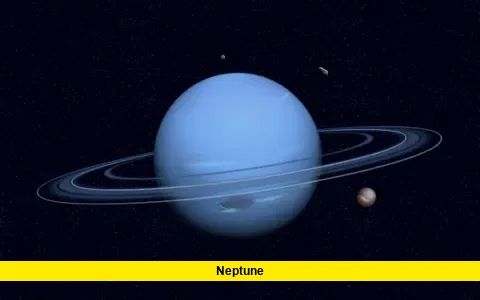
This comparison is particularly valuable because distant icy bodies can preserve material from the early stages of planetary formation.
The research suggests that the physical building blocks of planets around other stars may share some properties with those in our solar system.
Scientists also observed changes in the inferred grain population over time. By April 2026, the measurements favored an additional population of ice-rich grains.
Researchers have not established whether those changes resulted primarily from changing solar heating or from fresh material exposed as the comet’s surface eroded.
2. Webb Detected Methane in the Interstellar Comet
NASA announced another important finding on June 1, 2026. Observations made with Webb’s Mid-Infrared Instrument detected methane gas in 3I/ATLAS.
The observations covered December 15–16 and December 27, 2025, after the comet passed its closest point to the Sun.
Methane is a volatile compound that can transition from solid ice into gas relatively easily under suitable conditions. Its detection helped scientists investigate the comet’s subsurface material.
The timing of the methane release suggests that some of the methane may have remained protected beneath the surface until solar heating reached deeper layers.
Webb also confirmed that 3I/ATLAS was unusually rich in carbon dioxide relative to water compared with typical solar system comets.
These observations provide evidence that the comet formed in a chemical environment different from those represented by many familiar comets.
They do not, however, establish the exact star system in which 3I/ATLAS originated.
3. Scientists Found Unusual Gas Abundances
A study announced by the IRAM research institute on September 14, 2026, reported additional differences between 3I/ATLAS and comets from our solar system.
Researchers used the IRAM 30-meter telescope to analyze molecular emissions from the comet’s coma near its October 2025 perihelion.
The measurements identified several molecules, including:
- Hydrogen cyanide (HCN)
- Acetonitrile (CH₃CN)
- Methanol (CH₃OH)
- Formaldehyde (H₂CO)
- Carbon monoxide (CO)
- Carbon monosulfide (CS)
The presence of these molecules is consistent with the chemistry found in comets. However, their relative abundances revealed important differences.
The researchers found that 3I/ATLAS was depleted in hydrogen cyanide compared with typical solar system comet measurements. Its sulfur-to-carbon ratio was also unusually low.
Such differences matter because the proportions of chemical compounds can preserve information about the conditions under which icy bodies formed.
Scientists must compare more interstellar objects before determining whether these characteristics are common among objects from other planetary systems.
4. Researchers Measured Slower Gas Outflow
The IRAM observations revealed another unusual characteristic: molecular spectral lines were narrower than researchers expected for the comet’s activity level and distance from the Sun.
Spectral line widths can provide information about the speed of gas moving away from a comet’s nucleus.
The measurements suggest that the gas surrounding 3I/ATLAS was moving more slowly than gas released by many familiar solar system comets.
Researchers have proposed explanations involving heavier molecules, including carbon dioxide, or water released from icy grains surrounding the nucleus.
These are scientific interpretations of the observations, not definitive proof of a single mechanism.
Further comparisons with other interstellar comets will help establish whether 3I/ATLAS follows an unusual pattern or represents a broader category of interstellar objects.
5. October 2026 Research Examined the Comet’s Changing Activity
A study published online on October 20, 2026, investigated the brightness and activity of 3I/ATLAS using coordinated observations from a network of telescopes.
The research examined its earlier photometric behavior and the development of its dust coma.
Measurements taken before the comet reached the Sun’s closest point showed a steady increase in brightness as it approached the inner solar system.
The study measured a rotation period of approximately 15.98 hours, with an uncertainty of 0.08 hours.
Researchers also tracked changes in dust production and color. The observations did not show a statistically significant overall color change during the examined interval.
Although these measurements provide useful information about the comet’s behavior, they cover a defined period of its journey. They should not be interpreted as a complete description of its present activity.
Together, the recent studies show how repeated observations can reveal the evolution of an interstellar comet even after its closest approach to the Sun.
How Big Is Interstellar Object 3I/ATLAS?
Astronomers have not established the exact diameter of the solid nucleus of 3I/ATLAS.
Observations from the Hubble Space Telescope in August 2025 constrained the estimated diameter to a range of approximately 440 meters to 5.6 kilometers.
That broad range reflects the difficulty of measuring a small nucleus surrounded by a bright coma of gas and dust.
A telescope may detect light from the entire surrounding cloud rather than from the solid nucleus alone. Scientists must account for this additional light when estimating the object’s physical dimensions.
Future measurements and improved models may narrow the range, but the surrounding material makes a precise measurement challenging.
The coma can also change as the comet releases gas and dust. Its visible size therefore should not be confused with the diameter of the nucleus.
How Fast Is 3I/ATLAS Traveling?
The interstellar comet was traveling at approximately 137,000 miles per hour when it was discovered.
As it moved toward the Sun, solar gravity increased its speed. It reached approximately 153,000 miles per hour near perihelion in late October 2025.
These figures describe different stages of the object’s journey rather than a single constant speed.
As 3I/ATLAS moved away from the Sun, gravity gradually reduced the additional speed it had gained during its inward passage.
Because it follows an unbound trajectory, the comet will continue moving outward rather than returning to the Sun on a closed orbit.
Its exceptionally high speed is one of the reasons astronomers identified it as an interstellar visitor. However, its speed alone does not identify its precise birthplace.
3I/ATLAS Closest Approach to the Sun
The comet reached perihelion, its closest point to the Sun, around October 29–30, 2025.
At that time, it was approximately 1.36 astronomical units from the Sun, or roughly 203 million kilometers.
An astronomical unit represents the average distance between Earth and the Sun. Therefore, 3I/ATLAS remained farther from the Sun than Earth does, even at perihelion.
Its passage brought it just inside the orbital distance of Mars, but it did not approach the Sun as closely as many comets that travel into the inner solar system.
Solar heating nevertheless increased its activity. Researchers observed gas release and dust production as the comet moved through the region surrounding perihelion.
The post-perihelion observations have been particularly useful because they show how the material released by the comet changes after intense solar heating.
Did 3I/ATLAS Come Close to Earth?
No. Interstellar object 3I/ATLAS did not pose a threat to Earth.
Its closest approach to our planet occurred on December 19, 2025, when it remained approximately 170 million miles away, or about 270 million kilometers.
That distance is approximately 1.8 times the average distance between Earth and the Sun.
The comet’s trajectory took it through the solar system without placing it on a collision course with Earth.
Astronomers tracked its movement and calculated its path using repeated observations. Those calculations established that the object would remain safely distant from our planet.
Its classification as an interstellar object does not make it inherently dangerous. The relevant factor for planetary safety is its actual trajectory and distance, not whether it originated beyond the solar system.
There is no confirmed scientific evidence that 3I/ATLAS threatens Earth.
How NASA and Other Space Missions Observed 3I/ATLAS
The investigation of 3I/ATLAS involved more than one telescope or observing facility.
NASA and international research teams used different instruments to examine its position, brightness, chemical composition, and surrounding gas and dust.
Each instrument contributed a different type of information.
Hubble Space Telescope
Hubble helped astronomers estimate the nucleus’s size and examine the dust surrounding it.
Its observations revealed a cloud of material extending from the central object, providing evidence of cometary activity.
James Webb Space Telescope
Webb’s infrared instruments helped scientists identify methane and investigate carbon dioxide, water, and ice grains.
Infrared observations are particularly useful for studying molecules because different compounds produce characteristic spectral signatures.
SPHEREx
NASA’s SPHEREx mission observed 3I/ATLAS in December 2025 and helped characterize its infrared emissions.
Those measurements contributed to research into the comet’s activity and the organic molecules present in its surrounding material.
TESS
NASA’s Transiting Exoplanet Survey Satellite observed the comet during a special observation campaign in January 2026.
Researchers can use such time-series observations to investigate changes in brightness and activity, including possible evidence of rotation.
ESA and Other International Missions
The European Space Agency and its partners also contributed observations through spacecraft and astronomical facilities.
These included observations involving missions near Mars and other spacecraft positioned at different locations in the solar system.
The combined data set allows scientists to investigate the comet from multiple viewing angles and across different wavelengths of light.
Is 3I/ATLAS an Alien Spacecraft?
There is no verified evidence that 3I/ATLAS is an artificial spacecraft.
Its interstellar origin, high speed, and unusual chemistry have generated public interest, but these characteristics do not establish that it was engineered by an intelligent civilization.
Astronomers have observed behavior consistent with a naturally active comet. Gas release, dust production, and the development of a coma all fit established cometary processes.
The Breakthrough Listen initiative also conducted observations to search for potential technological signals associated with the object. Those searches reported no detected technosignatures.
A failure to detect such signals cannot establish every possible fact about the object. However, no confirmed observation has demonstrated that 3I/ATLAS is an alien probe.
The scientifically supported explanation remains that it is a natural interstellar comet.
What Can 3I/ATLAS Tell Us About Other Solar Systems?
The comet provides an opportunity to investigate the chemical and physical conditions in environments beyond our own planetary system.
When stars form, surrounding disks of gas and dust can produce planets, asteroids, comets, and other small bodies.
Some of these bodies can be ejected into interstellar space through gravitational interactions with planets or other objects. Once ejected, they may travel between stars for long periods.
If such an object enters another planetary system, astronomers can study it during its passage.
The composition of 3I/ATLAS may help researchers understand:
- How ice and dust combine in different planetary environments.
- Whether other planetary systems produce comets with unusual chemical ratios.
- How solar heating changes material beneath a comet’s surface.
- How gas and dust escape from small icy bodies.
- Whether interstellar objects share common physical characteristics.
The latest Webb and IRAM results show that studying an interstellar comet can reveal differences that would remain inaccessible through observations of our own solar system alone.
However, one object cannot represent every planetary system in the galaxy. Astronomers need additional discoveries to determine which characteristics are typical and which are unusual.
Where Is 3I/ATLAS Now?
As of November 1, 2026, 3I/ATLAS is moving outward from the Sun after completing its closest approach in October 2025 and passing Earth at a safe distance in December 2025.
It is no longer approaching the inner solar system on its original inbound trajectory. Instead, it continues along its outbound hyperbolic path toward interstellar space.
Its changing position and fading brightness affect which telescopes can observe it. The comet is now much farther along its journey than it was during its most active period near the Sun.
Research nevertheless continues through the analysis of observations already collected and additional observations when feasible.
Astronomers can use these data to study how its coma changes as solar heating decreases and how the comet’s material behaves during its departure.
Because the object will eventually become too faint for detailed observation, scientists are working to extract as much information as possible from the available measurements.
Its passage offers a temporary opportunity to study material from beyond our solar system before the comet disappears into interstellar space again.
FAQs
1. What is interstellar object 3I/ATLAS?
3I/ATLAS is a naturally active comet that originated outside our solar system. It is the third confirmed interstellar object discovered passing through our planetary neighborhood.
2. What is the latest update on 3I/ATLAS?
One of the latest major developments came on October 26, 2026, when researchers reported Webb observations showing tiny water-ice and dust aggregates around the comet. Recent research has also examined its unusual chemical composition and gas outflow.
3. When was 3I/ATLAS discovered?
The ATLAS survey telescope in Chile reported its discovery on July 1, 2025. Astronomers later identified earlier observations dating back to June 14, 2025.
4. Is 3I/ATLAS dangerous to Earth?
No. The comet’s closest approach to Earth occurred on December 19, 2025, at approximately 170 million miles away. Its calculated trajectory does not indicate a threat to Earth.
5. How fast is 3I/ATLAS moving?
It was traveling at approximately 137,000 miles per hour when discovered and reached approximately 153,000 miles per hour near its closest approach to the Sun in October 2025.
6. How large is the 3I/ATLAS nucleus?
Hubble observations constrained its estimated diameter to approximately 440 meters to 5.6 kilometers. Scientists have not established an exact diameter.
7. Did NASA’s Webb telescope detect methane on 3I/ATLAS?
Yes. Webb detected methane during observations in December 2025. The results, announced in June 2026, helped scientists investigate the comet’s subsurface chemistry and its unusually high carbon dioxide abundance relative to water.
8. Is 3I/ATLAS an alien spacecraft?
No confirmed evidence supports that claim. Observations show cometary activity, and searches for technological signals have not detected confirmed technosignatures.
9. Why is 3I/ATLAS different from ordinary comets?
It originated outside our solar system and follows an unbound trajectory. Researchers have also measured unusual chemical abundances, slower gas outflow, and distinctive ice-grain properties.
10. Can people see 3I/ATLAS from Earth?
Its visibility depends on its distance, brightness, and position in the sky. By November 2026, it is much farther from the Sun than during its 2025 passage, so observing it requires checking current astronomical ephemerides and suitable telescope capabilities.
11. Will 3I/ATLAS return to Earth or the Sun?
It is not expected to return on a regular orbit. Its hyperbolic trajectory will carry it away from the Sun and back into interstellar space.
12. Why are scientists continuing to study 3I/ATLAS?
Its chemistry, ice grains, and gas activity provide clues about the formation of small bodies around other stars. Continued analysis can help scientists distinguish characteristics common to comets from those specific to this unusual visitor.
Conclusion
Interstellar object 3I/ATLAS has become an important target for modern astronomy because it offers a rare opportunity to examine material formed beyond our solar system. Recent research has revealed unusual ice grains, distinctive chemical abundances, and gas behavior that differs from many familiar comets. The object poses no known threat to Earth, and its trajectory will carry it away from our planetary neighborhood. As researchers analyze additional observations, 3I/ATLAS may provide further insight into the diversity of planetary systems and the building blocks that form around other stars.
What do you find most fascinating about 3I/ATLAS: its interstellar origin, unusual chemistry, or the latest discoveries from the James Webb Space Telescope? Share your thoughts in the comments and stay updated on future scientific findings.