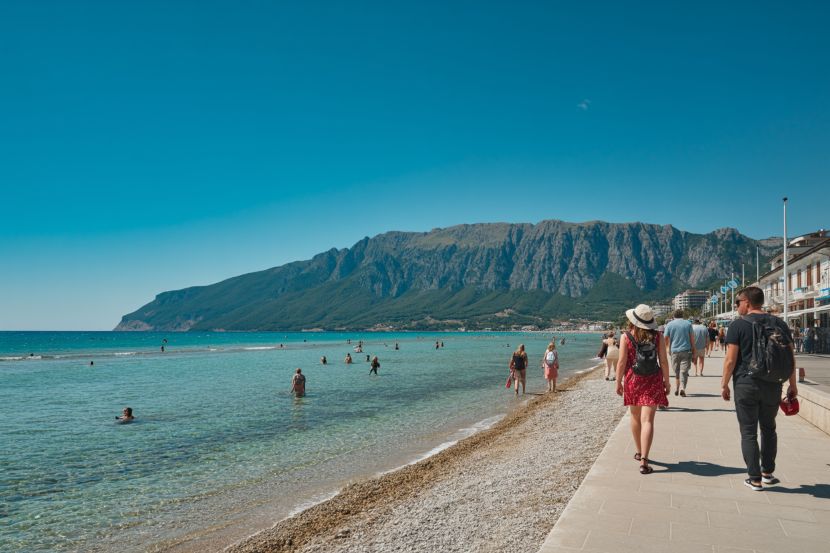
Albania has been having a moment. Dubbed by travel media as the “Maldives of Europe,” it welcomed a record number of tourists in 2025, and its Adriatic coastline — crystalline water, limestone cliffs, fishing villages untouched by mass resort development — has drawn travelers who want Mediterranean beauty without the Mediterranean markup. Then, earlier this month, that momentum ran into something uncomfortable: a formal US security alert.
Here’s what’s really going on.
What the US Actually Said
The US Embassy in Albania issued a security alert on April 13, 2026, citing growing concerns over potential threats from groups with ties to Iran. The alert advises American travelers to remain cautious and stay especially alert in crowded public spaces — tourist attractions, shopping malls, and restaurants.
The specific concern centers on pro-Iran groups that may target US entities or opposition elements present in Albania. This is not simply a generic crime warning — it reflects the geopolitical reality that Albania has, for years, hosted a significant population of Iranian dissidents, particularly members of the Mojahedin-e Khalq (MEK), a group that Tehran considers enemies of the Islamic Republic.
This is the part that most travel headlines gloss over. The threat is less about Albania itself and more about Albania as a stage for Iranian foreign policy grievances — a distinction that matters enormously when assessing actual risk.
The State Department’s formal advisory classifies Albania as Level 2: Exercise Increased Caution, primarily due to crime concerns. It notes that law enforcement capacity is limited in some remote areas and that targeted violence linked to drug networks and organized crime exists countrywide.
What Albanian Officials Said — and Why It Matters
Albania’s Interior Minister Besfort Lamallari stated publicly that there is “no concrete information, even intelligence, about a real dangerous situation” in Albania at this time. He added that the country’s Anti-Terror police, the Department of Public Safety, and the Criminal Police have all been ordered to coordinate directly with the US Embassy’s Security Office.
That response from Albanian authorities is worth paying attention to. Governments sometimes downplay risk, but here the public transparency and the active coordination with the US Embassy suggests a serious and professional response — not dismissal.
A Real-World Context: The MEK Factor
To understand why this specific advisory exists, you need to understand Albania’s unusual geopolitical position. Since 2013, Albania has accepted thousands of MEK members relocated from Camp Ashraf in Iraq at the request of the US and the UN. The MEK is a militant Iranian opposition group that the Islamic Republic despises with particular intensity. Albania is now home to the largest MEK community outside Iran.
Iran has, on multiple documented occasions, attempted operations in Europe targeting MEK members. In 2018, an Iranian diplomat was expelled from Austria for allegedly plotting a bomb attack on a MEK rally in Paris. Albania itself expelled two Iranian diplomats in 2018 and then severed diplomatic relations with Tehran entirely in 2022 after a major cyberattack attributed to Iran hit Albanian government infrastructure.
The US advisory, then, is not abstract. It reflects a real and documented pattern of Iranian state-sponsored action in countries hosting MEK members — and Albania is currently at the top of that list.
The Tourism Paradox
There is a growing tourism paradox at play. Albania welcomed over 12 million foreign visitors in 2025, a record surge driven by its affordability and dramatic coastline. When that number is considered alongside rising advisories, it becomes clear why precautionary messaging from governments intensifies — more visitors mean more visibility, and more visibility means more government caution.
In other words, Albania is arguably receiving more advisory attention partly because it’s become more popular. A destination that attracts 12 million visitors annually is no longer a backpacker secret — it’s a mainstream destination that governments must formally assess.
Albania’s Level 2 advisory is standard for many countries with heightened geopolitical risks. The warning does not mean Albania is more dangerous than other tourist hotspots facing similar concerns — it reflects the kind of routine diplomatic risk assessment that applies to dozens of destinations Americans visit every year without incident.
What This Means If You’re Planning a Trip
The United States has not imposed a travel ban. Travelers are advised to stay alert in public spaces, monitor local media, and maintain awareness of their surroundings at all times.
For those planning to visit, the US State Department recommends enrolling in the Smart Traveler Enrollment Program (STEP), which provides real-time alerts and makes it easier for the embassy to locate you in an emergency.
Practically speaking, the advice to avoid large crowded tourist gatherings, stay informed of local news, and keep your phone charged applies to dozens of countries — including several in Western Europe — that most Americans visit without hesitation.
The Honest Assessment
Travel advisories are not designed to tell you whether a country is “safe.” They are designed to ensure that if something does go wrong, the US government cannot be accused of not having warned you. The Level 2 designation for Albania has been in place for years, largely tied to organized crime concerns that predate any Iran-linked alert.
The newer, specific concern — Iranian-affiliated groups targeting US-associated locations — is real and should not be casually dismissed. But it is also highly specific in nature, not a broad threat to every street corner in Tirana or every beach on the Riviera. The Albanian Riviera, the mountain towns, the UNESCO-listed ruins of Butrint — none of these are the kind of high-profile, politically symbolic target that the alert describes.
The most sensible approach for American travelers isn’t to cancel plans. It’s to travel the way this advisory describes: aware, enrolled in STEP, avoiding large politically symbolic gatherings, and keeping an eye on embassy updates. That’s not fearful travel — it’s informed travel, which is the only kind worth doing anywhere.