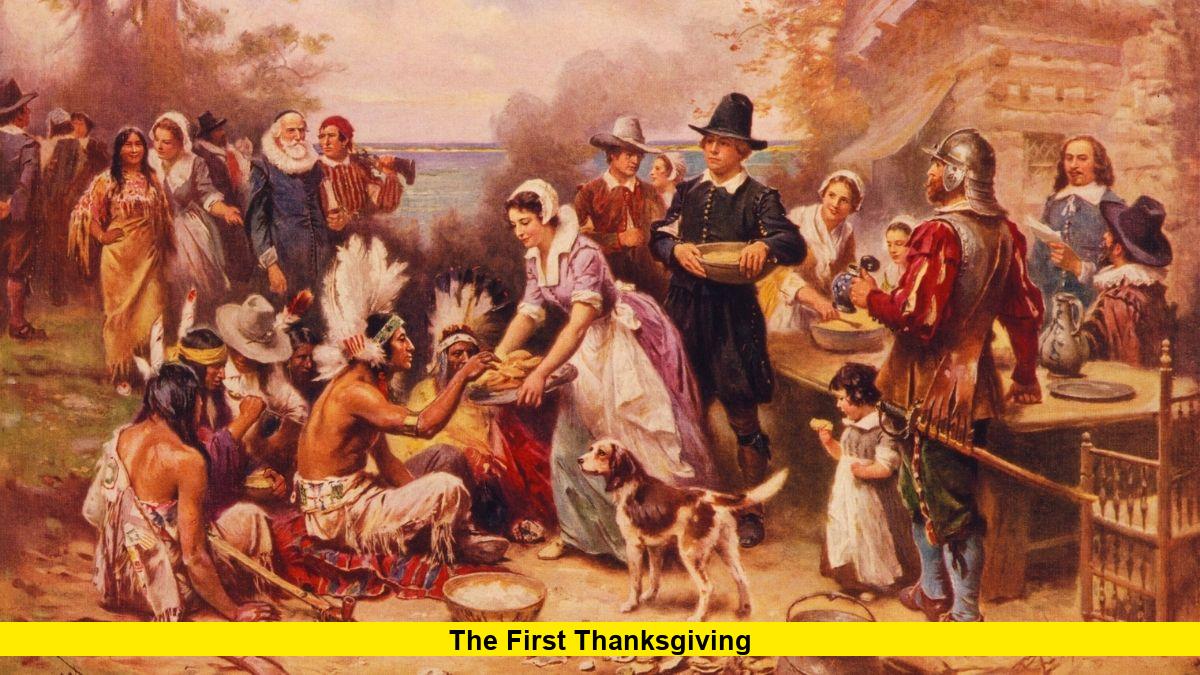
The story of the first Thanksgiving is one of the most recognizable chapters in American history, but the real event was more complicated than the familiar picture of Pilgrims and Native Americans sitting together around a turkey-filled table. The historic gathering took place in autumn 1621 in Plymouth, Massachusetts, when English colonists and members of the Wampanoag community came together following a successful harvest.
The event lasted several days and represented a moment of cooperation between two communities navigating unfamiliar circumstances, political relationships, survival, and changing conditions in New England. Although Americans traditionally associate the gathering with the origins of Thanksgiving, historians emphasize that the celebration was not called Thanksgiving at the time and was not the beginning of the modern national holiday.
Understanding the first Thanksgiving requires looking beyond the traditional classroom story to the historical records, the Wampanoag perspective, the food that may have been served, and the centuries-long evolution of the holiday Americans celebrate today.
The First Thanksgiving at a Glance
- Year: 1621
- Location: Plymouth, present-day Massachusetts
- Season: Autumn, following the colonists’ harvest
- Participants: English colonists and approximately 90 Wampanoag men
- Length: A celebration lasting several days, with Wampanoag participants present for three days
- Purpose: A harvest celebration and gathering during a period of cooperation and diplomacy
- Modern connection: The event became the symbolic historical foundation of the American Thanksgiving tradition
When Was the First Thanksgiving?
The event commonly recognized as the first Thanksgiving took place in 1621, after the English colonists at Plymouth Colony gathered their first successful harvest. The gathering occurred during the autumn months, although historians cannot establish its exact date.
The celebration followed the arrival of the Mayflower in 1620 and the difficult winter that left the new settlement struggling with illness, food shortages, and loss of life. The surviving colonists were facing an uncertain future, and the successful harvest represented an important milestone in their efforts to establish a permanent settlement.
The gathering involved members of the Plymouth Colony and the Wampanoag people, who had lived in the region for thousands of years before the English settlers arrived.
The event is now widely remembered as the first Thanksgiving, but the participants did not necessarily understand it as the beginning of a recurring holiday. It was a particular harvest celebration that later generations connected to the national Thanksgiving tradition.
Where Did the First Thanksgiving Take Place?
The first Thanksgiving is traditionally associated with Plymouth, Massachusetts, where the English settlers established their colony.
The settlement was located on land belonging to the Wampanoag people. The region had been inhabited by Indigenous communities for generations, and the Wampanoag possessed extensive knowledge of the area’s agricultural conditions, waterways, wildlife, fishing grounds, and seasonal resources.
The English colonists settled in an area that had previously been part of the Patuxet community. The effects of devastating epidemics had significantly reduced the Indigenous population in the region before the Mayflower arrived.
Today, Plymouth is recognized as one of the most important historical locations connected to the origins of Thanksgiving. Visitors can explore historical landmarks, museums, educational exhibits, and sites that explain the settlement’s history and the experiences of both the English colonists and the Indigenous people.
Who Attended the First Thanksgiving?
The gathering brought together two communities whose relationship was shaped by survival, diplomacy, and mutual interests.
The English Colonists
The English settlers who established Plymouth Colony arrived aboard the Mayflower in 1620. They included religious separatists seeking a new home as well as other passengers hoping for economic opportunities and a new life.
Their first winter in New England was extremely difficult. Disease, exposure, food shortages, and harsh conditions contributed to significant deaths among the settlers.
By the autumn of 1621, however, the surviving colonists had successfully harvested crops, providing an opportunity to celebrate their progress.
The Wampanoag People
The Wampanoag were not newcomers to the region. They had lived in their ancestral homeland for thousands of years and maintained established communities, political relationships, agricultural traditions, and knowledge of the surrounding environment.
The Wampanoag leader commonly identified in English records as Massasoit, whose name was Ousamequin, played an important role in the relationship between the Wampanoag and Plymouth settlers.
The Wampanoag approached the English settlement cautiously. Their cooperation was connected to regional political circumstances and strategic considerations, not simply an uncomplicated act of friendship.
Approximately 90 Wampanoag men participated in the harvest celebration, according to historical accounts.
How the Wampanoag Helped the Pilgrims Survive
The relationship between the Wampanoag and the Plymouth settlers was an important factor in the colony’s survival.
The English settlers lacked experience with the local environment. They did not fully understand the region’s growing conditions, food sources, seasonal patterns, or agricultural practices.
Indigenous knowledge helped the settlers adapt to their surroundings. The Wampanoag and other Native individuals provided assistance and information that helped the English establish crops, find food, and navigate the region.
One important individual was Tisquantum, commonly known as Squanto, a Patuxet man who spoke English and assisted the colonists. His life had been shaped by earlier encounters with Europeans, including captivity and travel overseas. He eventually returned to his homeland, where the effects of disease had devastated his community.
Tisquantum’s knowledge of English and the region made him an important intermediary. He helped the settlers communicate with Indigenous communities and understand aspects of local agriculture and survival.
The cooperation between the colonists and the Wampanoag was significant, but it should not be reduced to a simple story of permanent friendship. The relationship was complicated by changing political circumstances, colonial expansion, land pressures, and conflicts that developed over subsequent decades.
What Was Served at the First Thanksgiving?
The menu at the 1621 harvest celebration was likely very different from the Thanksgiving meal Americans prepare today.
Modern Thanksgiving dinners commonly include turkey, mashed potatoes, gravy, stuffing, cranberry sauce, sweet potatoes, green bean casserole, rolls, and pumpkin pie. Many of these dishes became popular through later culinary traditions.
The historical record provides limited information about the original meal. Edward Winslow, one of the Plymouth colonists, described a harvest celebration involving food and hunting, but he did not provide a complete menu.
Based on surviving accounts and the foods available in coastal New England during the early 17th century, the gathering likely included a variety of locally available ingredients.
Wild Birds
The colonists hunted birds for the celebration. The historical account refers to hunting fowl, but it does not specifically identify turkey as the centerpiece of the meal.
Wild birds may have included ducks, geese, and other species available in the area.
Venison
The Wampanoag participants reportedly brought five deer to the settlement. Venison was an important contribution to the gathering and reflects the hunting practices of the region.
Corn and Other Native Foods
Corn was an essential crop for Indigenous communities throughout much of North America. It was used in different forms, including grain, porridge, and other preparations.
Beans, squash, and other vegetables were also important foods in Indigenous agricultural traditions, although the precise dishes served during the 1621 gathering are not fully documented.
Seafood
The coastal location of Plymouth provided access to seafood, including fish and shellfish. Seafood was an important part of the diet of communities living along the New England coast.
Fruits, Berries, and Seasonal Foods
The gathering likely included seasonal ingredients available during the autumn harvest, including berries and other locally gathered foods.
Were Turkey and Pumpkin Pie Served?
Turkey may have been among the birds available during the period, but there is no surviving historical record confirming that turkey was specifically served at the 1621 celebration.
Pumpkin and other squashes were known in the region, but the familiar pumpkin pie served today was not part of the documented menu. The same is true of many modern Thanksgiving dishes.
The safest historical conclusion is that the meal included a variety of foods based on hunting, harvesting, gathering, and the resources available in the Plymouth region.
How Long Did the First Thanksgiving Last?
The 1621 celebration was not a single dinner lasting only a few hours.
Historical accounts describe a gathering lasting several days. The Plymouth colonists celebrated their successful harvest, while Wampanoag participants joined the festivities for approximately three days.
The gathering reportedly included food, recreation, and activities involving the colonists’ military practices. It was an extended event rather than the one-day holiday Americans observe today.
The duration is one of the details that separates the historical celebration from modern Thanksgiving traditions.
Was the First Thanksgiving a Peaceful Celebration?
The traditional story often presents the 1621 gathering as a symbol of friendship and peaceful cooperation between the Pilgrims and Native Americans.
There was cooperation, and the event occurred during a period when the Wampanoag and English settlers had established a relationship that included mutual assistance and a political alliance.
However, the historical circumstances were more complicated.
The Wampanoag had experienced devastating population losses from diseases introduced through European contact. Their communities faced regional political challenges, and the English settlement represented a new factor in the balance of power.
The relationship between the two communities was therefore shaped by diplomacy, strategy, survival, and mutual interests.
The gathering itself may have been a moment of cooperation, but it should not be interpreted as evidence that relations between Indigenous people and English colonists remained peaceful indefinitely.
Over time, colonial settlement expanded, Indigenous lands were increasingly occupied, and conflicts developed. Within a generation, the relationship would be dramatically affected by war and colonial expansion.
Why the Traditional First Thanksgiving Story Is Being Reexamined
For generations, many American schoolchildren learned a simplified version of the first Thanksgiving.
The familiar story typically included:
- Pilgrims arriving in America seeking religious freedom
- Native Americans helping the settlers survive
- A successful harvest
- A shared meal featuring turkey
- A lasting friendship between the two communities
Although some elements are historically grounded, the traditional narrative often leaves out important details.
Modern historical education increasingly emphasizes that:
- The Wampanoag people were already living in the region long before the English arrived.
- Plymouth was established on Indigenous land.
- Native communities had extensive knowledge of the environment and agricultural practices.
- European diseases had devastating effects on Indigenous populations before and during colonial expansion.
- The relationship between the English settlers and the Wampanoag involved diplomacy and strategic interests.
- The 1621 celebration did not represent the beginning of a permanent peaceful relationship.
- Indigenous perspectives are essential to understanding the event.
The Smithsonian National Museum of the American Indian provides educational material that examines the traditional Thanksgiving narrative and encourages readers to understand the history from multiple perspectives.
Historical education resource: The “First Thanksgiving”: How Can We Tell a Better Story?
Was 1621 Really the First Thanksgiving in America?
The answer depends on what someone means by the term “first Thanksgiving.”
The 1621 Plymouth harvest celebration is the event most commonly identified as the first Thanksgiving in American tradition. However, other European colonial communities held ceremonies of thanksgiving before that gathering.
Some earlier celebrations included religious services, prayers, or gatherings following successful arrivals, harvests, or other significant events.
For example, historical records describe thanksgiving observances associated with English colonies in Virginia and other regions before 1621. Spanish colonial celebrations and Indigenous harvest traditions also existed long before the Plymouth gathering.
The distinction is important:
- The 1621 Plymouth celebration is the event most closely connected to the modern American Thanksgiving story.
- Earlier thanksgiving observances occurred in different parts of North America.
- Indigenous harvest and gratitude traditions existed for centuries before European colonization.
The 1621 gathering became especially influential because it was later incorporated into the national story of Thanksgiving.
What Is the Historical Evidence for the First Thanksgiving?
Historians rely on a limited number of surviving written records to reconstruct what happened in Plymouth in 1621.
One of the most important accounts comes from Edward Winslow, who wrote about the harvest celebration in a letter dated December 11, 1621. His description provides information about the gathering, the hunting activities, the arrival of Wampanoag participants, and the deer they brought.
Another historical source is associated with Plymouth Colony’s early records and writings.
There are no photographs or contemporary illustrations of the gathering. Many popular images of the first Thanksgiving were created centuries later and reflect the artistic and cultural interpretations of their own periods rather than eyewitness depictions.
The National Archives has also examined how the event became part of the national Thanksgiving narrative and how later generations shaped the historical story.
Historical overview: Thanksgiving: Historical Perspectives
How the First Thanksgiving Became a National Holiday
The 1621 gathering was not a federal holiday. It was a local harvest celebration that eventually became associated with the broader Thanksgiving tradition.
Thanksgiving observances occurred at different times in various colonies and states. In many early communities, days of thanksgiving were connected to religious observances, harvests, military victories, or important events.
The holiday’s national development took place centuries after the Plymouth gathering.
George Washington and Early National Thanksgiving Proclamations
After the United States became an independent nation, President George Washington issued a proclamation in 1789 calling for a national day of thanksgiving and prayer.
The observance was not yet an annual holiday in the modern sense. National thanksgiving proclamations occurred at different times and under different circumstances.
Abraham Lincoln Establishes an Annual National Thanksgiving
A major turning point came in 1863, when President Abraham Lincoln proclaimed a national Thanksgiving observance during the Civil War.
Lincoln’s proclamation helped establish Thanksgiving as an annual national tradition. The timing was significant because the country was experiencing division, loss, and uncertainty.
His declaration encouraged Americans to reflect on gratitude, national unity, and the blessings that remained despite the challenges facing the nation.
Franklin D. Roosevelt and the Modern Thanksgiving Date
Thanksgiving’s date was not always the fourth Thursday of November.
In 1939, President Franklin D. Roosevelt moved the observance earlier in November in an effort to extend the holiday shopping season. The change created disagreement because different states followed different dates.
Congress eventually resolved the issue.
In 1941, federal legislation established Thanksgiving as the fourth Thursday of November, the date followed today.
The holiday is now recognized as a federal holiday, and Americans across the country observe it with family gatherings, meals, travel, community events, parades, and football.
When Is Thanksgiving in 2026?
Thanksgiving in the United States will be observed on Thursday, November 26, 2026.
The holiday follows the federal rule established in 1941, which places Thanksgiving on the fourth Thursday of November each year.
The 2026 holiday will bring together the historical tradition of Thanksgiving with modern American customs, including family dinners, football, parades, travel, volunteering, and the beginning of the holiday shopping season.
Readers planning their November schedules can also review the November 2026 calendar with holidays and important dates for the Thanksgiving holiday and other November observances.
How Americans Celebrate Thanksgiving Today
Thanksgiving has evolved significantly since the 17th century. Today, the holiday is observed throughout the United States and is associated with a wide range of traditions.
Family and Friends Gather for Meals
Many Americans travel to visit relatives or friends and share a Thanksgiving meal. The dinner often includes turkey, stuffing, mashed potatoes, gravy, cranberry sauce, vegetables, desserts, and regional specialties.
Some families maintain traditional recipes passed down through generations, while others create new menus reflecting different cultural backgrounds.
Thanksgiving Parades
Parades are an important part of the modern Thanksgiving celebration. The Macy’s Thanksgiving Day Parade in New York City is among the most recognizable holiday events, featuring giant balloons, floats, performances, marching bands, and celebrity appearances.
Other cities also hold local Thanksgiving parades and community celebrations.
Football on Thanksgiving
Football has become another major Thanksgiving tradition. The NFL regularly schedules games on Thanksgiving Day, attracting viewers who watch games before, during, or after their holiday meals.
The tradition has helped make Thanksgiving one of the most recognizable sports days on the American calendar.
Volunteering and Helping Others
Many communities organize food drives, volunteer programs, charitable meals, and donation events during Thanksgiving.
Food banks and nonprofit organizations often experience increased demand during the holiday season, and Thanksgiving provides an opportunity for individuals and families to support people experiencing food insecurity or other challenges.
A Day of Gratitude
For many Americans, Thanksgiving remains a day centered on gratitude. Families may take time to express appreciation for their loved ones, personal experiences, opportunities, health, and community support.
The meaning of gratitude varies from household to household, but it remains one of the central themes of the modern holiday.
Thanksgiving and Native American Perspectives
Thanksgiving has different meanings for different people, and many Native American communities approach the holiday through historical reflection, remembrance, cultural education, and recognition of Indigenous experiences.
For some Indigenous people, Thanksgiving is associated with the loss of land, colonial expansion, violence, disease, and the disruption of Native communities.
The National Day of Mourning, held in Plymouth, Massachusetts, is an annual observance organized by Indigenous activists and supporters to reflect on the history of colonization and the experiences of Native peoples.
This perspective does not erase the historical gathering in 1621. Instead, it adds context to the event and encourages a more complete understanding of the history behind the holiday.
Learning about Thanksgiving from both English colonial records and Indigenous perspectives allows readers to understand why the event remains historically significant while also recognizing the broader consequences of colonization.
Why the First Thanksgiving Still Matters Today
The first Thanksgiving continues to attract attention because it represents more than an early American meal.
It connects several important themes in U.S. history:
- Colonial settlement: The arrival and establishment of English communities in New England.
- Indigenous history: The long-standing presence of Native communities and their experiences during European colonization.
- Cooperation: The relationship between the Plymouth settlers and the Wampanoag during the early years.
- Survival: The challenges faced by the colonists during their first years in the region.
- Cultural traditions: The development of a holiday that became central to American life.
- Historical interpretation: The way generations have changed and reconsidered the Thanksgiving story.
The event remains a subject of discussion in schools, museums, historical institutions, and families because the story reflects both the origins of a national tradition and the complicated history of the country.
For readers interested in a broader explanation of the historical year and the origins of the celebration, the related article What Year Was the First Thanksgiving? provides additional background on the 1621 gathering and its place in American history.
Where Can Readers Learn More About the First Thanksgiving?
Readers interested in the historical background can explore additional educational resources from major American historical institutions.
- The Smithsonian National Museum of the American Indian offers information about Wampanoag history, the 1621 gathering, and the traditional Thanksgiving narrative.
- The National Archives provides historical perspectives on Thanksgiving and the development of the national holiday.
- The Library of Congress offers educational materials explaining the historical origins and traditions associated with Thanksgiving.
- HISTORY provides an overview of the 1621 harvest celebration and how Thanksgiving developed into a national holiday.
These resources help readers distinguish documented historical information from popular traditions and later interpretations.
The First Thanksgiving: A More Complete Historical Story
The first Thanksgiving is commonly remembered as the 1621 harvest celebration in Plymouth, Massachusetts, where English colonists and Wampanoag people gathered during a period of cooperation. The event was significant because it reflected the successful harvest of the Plymouth settlers and the relationship that had developed between the two communities.
However, the historical record is more complex than the traditional image of a peaceful dinner between Pilgrims and Native Americans. The Wampanoag were established communities with their own history, political relationships, and traditions long before the English arrived. Their participation in the gathering was connected to a complicated period of diplomacy, survival, and regional circumstances.
The modern Thanksgiving holiday developed much later. Abraham Lincoln’s 1863 proclamation helped establish the national tradition, and Congress ultimately fixed the holiday on the fourth Thursday of November in 1941.
As Americans prepare to celebrate Thanksgiving on November 26, 2026, understanding the history of the 1621 gathering offers a deeper appreciation of the holiday while recognizing the experiences and perspectives of the Indigenous people who were part of its history.
What do you think Americans should remember most about the first Thanksgiving—the tradition of gratitude, the historical cooperation, or the fuller story of the Wampanoag people? Share your thoughts and join the conversation.