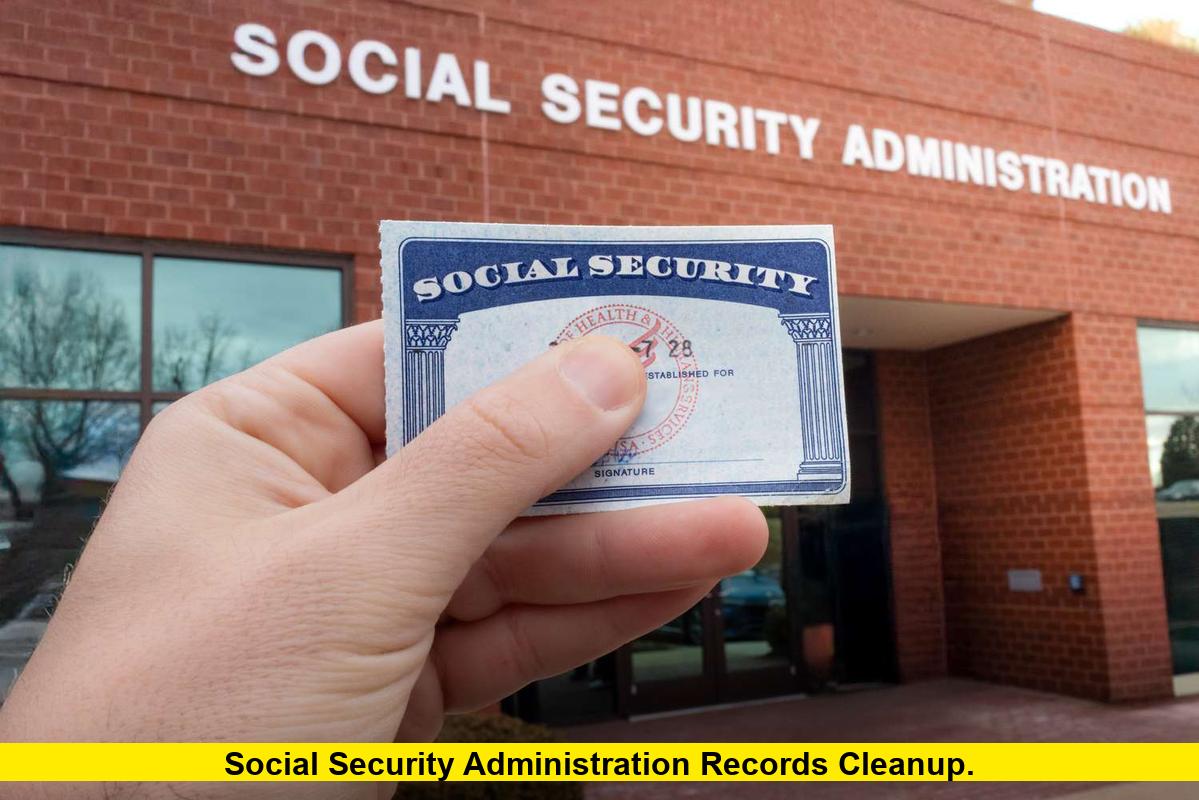
The Social Security Administration records cleanup hit a major milestone on October 20, 2026. The agency announced it had corrected nearly 15% of all active Social Security numbers since President Donald Trump took office in January 2025. Commissioner Frank Bisignano called it the most comprehensive cleanup of the number database in the agency’s 91-year history.
The database covers about 330 million U.S. citizens. It holds nearly 390 million records in total. Millions of those records now carry death or citizenship details that were missing before.
What the Agency Announced on October 20
The Social Security Administration made its announcement on Tuesday, October 20, 2026. The agency says it added 17 million dates of death to records that lacked one. It also updated about 25 million records that had no citizenship information.
Work continues on another 8.5 million records that show inaccurate citizenship status. Those fixes are not finished yet.
Here is a snapshot of the figures the agency released:
| Item | Figure |
|---|---|
| Active Social Security numbers corrected | Nearly 15% |
| U.S. citizens covered by the database | About 330 million |
| Total records in the database | Nearly 390 million |
| Death dates added | 17 million |
| Citizenship records updated | About 25 million |
| Citizenship records still being corrected | 8.5 million |
Fifteen percent of 330 million works out to close to 50 million records. Some outlets headlined the total that way.
Where the Citizenship Data Came From
The agency pulled the citizenship updates from the Department of Homeland Security. It used the Systematic Alien Verification for Entitlements service, known as SAVE. That system lets agencies confirm immigration and citizenship status.
Bisignano said accurate number records prevent fraud across federal programs and support proper benefit administration. He also said the agency had never attempted a project of this scale. He described the work as strengthening the identity data that government and the broader economy rely on.
Why Death Dates Sit at the Center
The cleanup focuses on the Numident, the agency’s master file of Social Security number assignments and identity details. The file dates back to 1936. The agency builds its Death Master File from Numident entries. Federal agencies and states use that data to verify who is alive.
A missing death date creates risk. The number stays open, and someone could misuse it. Survivor benefits also depend on accurate death records. Those records help the agency decide who qualifies and prevent incorrect payments.
Missing Death Dates Do Not Mean Dead People Got Checks
Public debate in 2025 blurred an important point. Elon Musk and President Trump suggested that millions of dead people were collecting Social Security benefits. Those claims leaned on agency records of people born more than a century ago. Their files showed no death date.
Then-acting Commissioner Lee Dudek later set the record straight. A missing death date, he explained, does not mean the agency kept paying benefits. The records simply belonged to numbers issued to people whose deaths were never entered.
A 2023 inspector general report supports that view. It found no death information on file for about 18.9 million people born in 1920 or earlier. Almost none of them received payments.
The inspector general still saw a real problem. The report recommended that the agency add the missing dates. It warned that those open numbers could allow a wide range of potential abuse.
Current payment data shows the same pattern. Federal figures show about 92,000 retired workers aged 99 or older received benefits in June 2026. That number has barely changed in recent years. It is also comparable to the size of a small U.S. city.
The agency has another safeguard in place. It automatically suspends payments to anyone listed as 115 years old or older.
This is why the October 20, 2026 cleanup matters. Adding 17 million death dates closes a records gap. It does not mean 17 million dead people were receiving checks.
How the 2025 Effort Fit In
The Department of Government Efficiency joined an earlier Numident cleanup in 2025. Its first announcements claimed that millions of people older than 110 were fraudulently collecting Social Security benefits. The agency later clarified that these were simply numbers issued to people whose death dates were unknown. Those people were not collecting benefits.
DOGE then posted that about 12.3 million people aged 120 or older had been marked deceased after 11 weeks. The group broke the total down by age:
- 3.3 million people aged 120 to 129
- 3.9 million people aged 130 to 139
- 3.5 million people aged 140 to 149
- 1.3 million people aged 150 to 159
- More than 124,000 people aged 160 to 169
DOGE added that some complex cases remained, such as people with two or more birth dates on file. Independent outlets could not confirm the figures at the time. Multiple news outlets, including The New York Times, had also reported that DOGE promoted misleading claims and accounting errors on other topics.
The effort drew scrutiny over data security as well. A whistleblower filed a complaint on August 26, 2025, alleging that DOGE uploaded a live copy of the Numident to an insecure cloud server. That claim remains an allegation.
The October 20, 2026 announcement covers a different period and uses different totals. The agency counts its corrections from the start of the Trump administration in January 2025.
Key Dates in the Records Cleanup
| Date | Development |
|---|---|
| 2023 | Inspector general finds 18.9 million people born in 1920 or earlier with no death data |
| January 2025 | Trump administration begins; the agency counts its corrections from this point |
| August 26, 2025 | Whistleblower complaint alleges insecure Numident copy |
| July 2, 2026 | Inspector general releases audit on wrongly recorded deaths |
| October 20, 2026 | Agency announces its largest cleanup in history |
What the Latest Audit Found About Mistakes
The inspector general’s office released a new audit on July 2, 2026. It examined beneficiaries who were incorrectly recorded as deceased. The agency posted about 5.6 million death records to the Death Master File in calendar year 2025. Of those, 12,504 proved erroneous, or 0.22%.
Auditors also reviewed removals of wrong death records between January 2020 and December 2024. In 45% of the sampled corrections, technicians did not document why the death was recorded or why they removed it. Agency policy requires that documentation.
That gap matters. Without notes, the agency struggles to answer beneficiary questions and to handle later death reports on the same record. The inspector general called stronger guidance and consistent documentation essential.
Early Fraud-Prevention Results
The Treasury Department reported earlier this year that it stopped roughly $99 million in payments headed to dead people. The Treasury relied on Social Security data to do it. It checked payments against the agency’s Full Death Master File, which contains death records. That check flagged potentially ineligible recipients before any money went out.
Stopping a payment before it leaves federal accounts matters. Recovering money after the fact is slow, costly and often unsuccessful. Screening up front keeps taxpayer dollars from going to the wrong place in the first place.
Treasury says it will keep using the verification system across federal programs. The goal is to catch questionable payments before they are issued, not after.
The approach depends on accurate death records. Complete data gives that kind of screening more to work with. That is one reason the agency’s October 20, 2026 announcement matters. The agency says it added 17 million dates of death to records that previously lacked one.
Federal agencies and states also use Social Security records to verify identities and administer programs funded by taxpayers. The agency says accurate number records prevent fraud across those programs.
The $99 million figure comes from Treasury’s own reporting. The agency has not said how much the newly added death dates will add to future savings.
What the Cleanup Means for You
The Social Security Administration has not announced any new requirement for people to check or update their records. You do not need to take action because of the cleanup. Still, a quick review takes only a few minutes and can catch problems early.
Here are practical steps:
- Sign in to your my Social Security account at ssa.gov.
- Review your earnings history for gaps or errors.
- Check your payment details if you receive benefits.
- Report any mistake to the agency promptly.
- Call 1-800-772-1213 if your benefits stop without explanation.
Accurate records matter because they decide who qualifies for benefits. Death records are especially important. They help the agency prevent incorrect payments and protect survivor benefits for eligible family members after a loved one dies.
Errors can happen, though they are rare. An audit released July 2, 2026 found that 12,504 of the roughly 5.6 million death records posted in 2025 were wrong. That is 0.22%. Anyone who believes the agency lists them as deceased by mistake should contact Social Security directly.
Families can also help. Keep your contact details current and report a death to the agency promptly. Clean records protect everyone who relies on benefits.
What Comes Next
This Social Security Administration records cleanup is still unfolding. The agency says it continues to correct the 8.5 million records with inaccurate citizenship status. The July audit also leaves a clear to-do list, starting with better documentation when technicians fix death records.
Agencies across the federal government depend on this data. Accuracy matters for retirement, disability and survivor benefits alike. Expect further updates as the agency finishes the remaining corrections.
Have you checked your Social Security record lately? Share your thoughts in the comments and stay tuned for the latest updates.