If you are searching for php vulnerability what is it, the latest security developments highlight why website owners, developers, and hosting providers must take software security seriously. PHP, a programming language that powers a substantial portion of the internet, has received urgent security updates addressing two critical vulnerabilities that could allow attackers to execute malicious code on affected web servers without authentication.
The PHP development team released emergency security updates on October 21, 2026, after identifying two serious flaws associated with remote code execution. The vulnerabilities, tracked as CVE-2026-109618 and CVE-2026-109619, have been associated with the name PHP2Shell. Both received critical severity ratings, with a reported CVSS v4.0 score of 9.2 out of 10.
The warning has attracted international cybersecurity attention. The U.S. National Security Agency (NSA) has advised organizations to prioritize security patches, identify vulnerable systems, and maintain heightened monitoring of internet-facing services. Organizations unable to apply an immediate fix should consider taking affected systems offline until they can be adequately protected.
For website owners, the most important takeaway is straightforward: identify which PHP version your website uses and apply the appropriate security update without unnecessary delay.
What Is a PHP Vulnerability?
A PHP vulnerability is a weakness in the PHP programming language, its implementation, or the way a PHP-based application is deployed that could allow an attacker to compromise a website, server, or its data.
PHP stands for PHP: Hypertext Preprocessor. It is a server-side programming language used to build dynamic websites, process forms, manage user sessions, communicate with databases, and power web applications.
Many popular content management systems and online services rely on PHP. WordPress is one prominent example, alongside numerous e-commerce platforms, publishing systems, customer portals, and custom business applications.
A vulnerability can occur when software handles memory incorrectly, processes untrusted input unsafely, or fails to manage internal data properly. Attackers may attempt to exploit such weaknesses to gain unauthorized access, execute commands, steal information, or disrupt services.
Not every PHP vulnerability has the same level of severity. Some flaws may expose limited information or require specific conditions to exploit. Others, particularly remote code execution vulnerabilities, can create a much more serious threat because they may allow an attacker to run unauthorized code on a server.
The current PHP2Shell security issue falls into the latter category, making prompt patching particularly important.
Why Is the Latest PHP Vulnerability Making Headlines?
PHP is widely used across websites and web applications, making vulnerabilities in the underlying language potentially significant beyond a single website or software product.
Recent estimates suggest that PHP is used by approximately 70% of websites, although the precise percentage depends on the measurement method and which websites are included. This does not mean that 70% of websites are vulnerable to the latest issue. Actual exposure depends on the PHP version, server configuration, deployment method, and whether the relevant security fixes have been applied.
The latest warning concerns two critical vulnerabilities that can enable unauthenticated remote code execution under applicable conditions.
Unauthenticated exploitation is especially concerning because an attacker may not need a legitimate account or previously obtained credentials to initiate an attack. In the highest-risk deployment scenarios, a malicious request may trigger the underlying flaw before the website’s application-level security checks can run.
The potential consequences include unauthorized command execution, exposure of sensitive information, disruption of online services, and further access to systems connected to the affected server.
The PHP security team has released corrected versions, and cybersecurity agencies are urging administrators to act immediately rather than waiting for routine maintenance schedules.
What Is PHP2Shell?
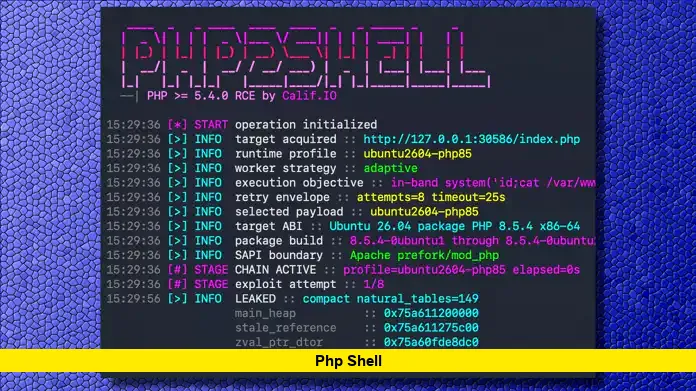
PHP2Shell is the name associated with the two newly disclosed critical PHP vulnerabilities. The issues are tracked under the following identifiers:
- CVE-2026-109618: A remote code execution vulnerability associated with incorrect handling of out-of-memory conditions.
- CVE-2026-109619: A remote code execution vulnerability involving stale internal state and memory that has already been freed.
Both flaws involve problems in PHP’s internal memory or state management. Under certain circumstances, these errors can cause PHP to handle internal data incorrectly and potentially allow an attacker to execute arbitrary code.
The vulnerabilities affect PHP itself rather than being limited to a particular WordPress plugin, theme, or website application. Consequently, simply updating a content management system or installing a security plugin does not necessarily resolve the underlying problem.
The PHP runtime must be updated to a corrected version, or administrators must apply an appropriate vendor-provided security fix.
CVE-2026-109618: Out-of-Memory Corruption
The first vulnerability involves PHP’s handling of memory when a request encounters an out-of-memory condition.
In simplified terms, a server has a limited amount of memory available for processing requests. When PHP reaches its configured memory limit at a particular point during request handling, internal data may be left only partially initialized.
If subsequent cleanup operations incorrectly treat that data as valid, memory corruption can occur. Under the right conditions, an attacker may be able to exploit this behavior to execute unauthorized code.
The significance of this vulnerability is that the problem occurs within PHP’s internal processing. It is not necessarily dependent on a coding mistake in a particular website’s application.
CVE-2026-109619: Stale Global State
The second vulnerability involves internal request-related information that can remain accessible after the memory supporting it has been released.
If a PHP worker subsequently encounters that stale information before the appropriate initialization process resets it, the software may use invalid internal state.
This type of memory-management flaw can create opportunities for unexpected behavior and potentially remote code execution.
Together, the two vulnerabilities demonstrate why security fixes to the underlying programming language are essential, even when a website’s own code has not recently changed.
Which PHP Versions Are Affected?
The PHP security team released corrected versions on October 21, 2026. Administrators should verify their installed versions and update to the corresponding fixed release.
The following table summarizes the main fixed versions announced by the PHP project.
| PHP release branch | Fixed version |
|---|---|
| PHP 8.5 | PHP 8.5.12 |
| PHP 8.4 | PHP 8.4.27 |
| PHP 8.3 | PHP 8.3.36 |
| PHP 8.2 | PHP 8.2.35 |
Install the corrected version for your existing release branch where possible, or migrate to another supported branch according to your application’s compatibility requirements.
Important: PHP 8.1 and older versions no longer receive regular security updates directly from the PHP project. Some operating-system distributions and long-term support providers may supply backported fixes, so administrators should confirm the status of their specific packages rather than assume that an older version is protected.
A version number alone may not tell the whole story when a hosting company or Linux distribution maintains its own patched packages. Verify the vendor’s security advisory and package status before concluding that an installation is safe.
What Did the NSA Say About PHP Security?
The National Security Agency issued a public advisory on October 21, 2026, warning organizations about the potential risks associated with PHP2Shell.
The agency emphasized the importance of identifying systems that depend on vulnerable PHP versions and prioritizing the installation of relevant security patches.
Its recommendations include:
- Inventorying hardware, software, and services that rely on affected PHP installations.
- Applying the appropriate PHP and vendor-specific security updates as quickly as possible.
- Increasing logging and monitoring across network and operational environments.
- Replacing end-of-life PHP services that cannot receive compatible security fixes.
- Considering taking affected systems offline when an immediate update is not feasible.
The NSA also warned that the vulnerabilities could provide a route to sensitive server resources and could be exploited to steal information, disrupt services, or move deeper into a compromised network.
This warning is particularly relevant to businesses, government organizations, hosting providers, and companies operating internet-facing applications.
The recommendation to take systems offline should be understood as a precaution for affected systems that cannot be adequately protected in time, not as a blanket instruction for every website using PHP. Administrators should assess exposure and follow the applicable security guidance.
How Dangerous Is a PHP Vulnerability?
The severity of a PHP vulnerability depends on what an attacker can achieve, how easily the weakness can be exploited, and which systems are exposed.
The latest PHP2Shell flaws have been rated CVSS v4.0 9.2, placing them in the critical severity category.
Their potential impact extends beyond a website displaying an error or temporarily becoming unavailable.
Unauthorized Code Execution
Remote code execution can allow an attacker to make a vulnerable server run commands or code that its administrator did not authorize.
Depending on the attacker’s privileges and the server’s configuration, this could lead to further compromise.
Sensitive Data Exposure
A compromised server may provide access to application files, configuration settings, database credentials, session information, or other sensitive data.
The actual information accessible depends on the permissions and security boundaries in place.
Website Disruption
Attackers may interfere with website operations, damage files, interrupt services, or make an online platform unavailable to customers.
For businesses that depend on online transactions, even a short interruption can affect revenue and customer confidence.
Wider Network Compromise
A web server may communicate with databases, internal applications, cloud services, or other infrastructure.
If attackers gain control of the server, they may attempt to exploit those connections to expand their access. Strong network segmentation and restricted service permissions can help limit this risk.
Malware and Unauthorized Accounts
After compromising a server, attackers may attempt to install malicious software, create unauthorized accounts, or modify legitimate files to maintain access.
For that reason, updating PHP is essential, but investigating suspicious activity is also important if a server may already have been exposed.
Who Needs to Take Action Immediately?
The latest warning is relevant to more than software developers.
Website owners: Anyone operating a PHP-based website should identify the runtime version used by the live site and contact their hosting provider if they cannot verify its security status.
WordPress administrators: WordPress websites commonly depend on PHP. Administrators should check the PHP version configured for their hosting environment rather than assume that updating WordPress core automatically fixes the PHP runtime.
E-commerce businesses: Online stores may process customer information, payment-related transactions, and account credentials. Their administrators should prioritize patching, investigate relevant logs, and review the security of connected services.
Hosting providers: Providers operating PHP across shared hosting, virtual private servers, and managed environments should identify affected installations and communicate patching requirements to customers.
Developers and IT teams: Teams responsible for application infrastructure should check production servers, containers, development environments that are publicly exposed, and third-party products that bundle PHP.
Government agencies and enterprises: Organizations with large infrastructure environments should maintain an inventory of PHP-dependent assets, prioritize internet-facing systems, and verify that security fixes have been applied consistently.
The key question is not simply whether an organization uses PHP. It is whether any of its deployed PHP components remain vulnerable and exposed.
How to Check Your PHP Version
Website administrators can usually identify their active PHP version through their hosting control panel or server administration tools.
Method 1: Check Your Hosting Dashboard
Many hosting providers display the configured PHP version in a section related to software, server settings, or PHP configuration.
Review the version associated with the actual website and domain. Some hosting accounts support multiple PHP versions, so checking only the account’s default setting may not be sufficient.
Method 2: Use a Server Command
If you have command-line access, run the following command:
php -vThis displays the PHP version used by the command-line executable.
However, the command-line version may differ from the PHP version serving web requests. For example, a server could use one version for command-line tasks and another through PHP-FPM or an Apache module.
Where possible, verify the runtime used by the live website as well.
Method 3: Contact Your Hosting Provider
If you use managed hosting or do not have administrative access, ask the provider to confirm:
- Which PHP version handles requests for your website.
- Whether the PHP2Shell security fixes have been installed.
- Whether any separate vendor-specific updates are required.
- Whether your current PHP branch remains supported.
Avoid publishing a publicly accessible PHP information page that reveals detailed server configuration. If a temporary diagnostic page is necessary, restrict access appropriately and remove it immediately after use.
How to Fix the Latest PHP Vulnerability
The most important remediation step is to install a corrected PHP version or an appropriate security package from your trusted vendor.
Step 1: Identify All PHP Installations
Check production servers, web hosting accounts, containers, virtual machines, and other systems that serve PHP requests.
Remember that an organization may operate multiple websites or applications on different PHP versions.
Step 2: Apply the Correct Security Update
Update to the fixed version for your release branch or install the corresponding patched package supplied by your operating-system or hosting vendor.
Do not assume that updating one server automatically fixes every website in your environment.
Step 3: Test Critical Applications
Where feasible, test the update in a staging environment before deploying it across production systems. Check application compatibility, database connectivity, scheduled tasks, file uploads, authentication, and essential business functions.
Testing should support rapid remediation, not become a reason to leave an exposed system unpatched indefinitely.
Step 4: Restart or Reload Services if Required
Depending on the deployment method and package manager, services such as PHP-FPM or the web server may need to be restarted or reloaded for the new runtime to take effect.
Follow the procedures recommended by your hosting provider or system administrator.
Step 5: Verify the Installed Version
After updating, confirm that the live website is using the corrected runtime. Check every relevant server and deployment rather than relying only on the successful completion of an installation command.
Step 6: Review Logs and Investigate Suspicious Activity
Examine web server, application, authentication, and endpoint logs for unusual requests, unexpected processes, unfamiliar files, unauthorized accounts, or suspicious outbound connections.
If there is evidence of a compromise, follow your incident-response procedures. Preserve relevant evidence, restrict unauthorized access, rotate potentially exposed credentials, and investigate persistence mechanisms before declaring the system clean.
A successful update closes the known vulnerability, but it does not automatically remove malware or reverse damage that may have occurred before patching.
What If You Cannot Update PHP Immediately?
Delaying a security update can leave an internet-facing server exposed to attack.
If an immediate patch is not possible, administrators should evaluate temporary risk-reduction measures and follow official guidance. Depending on the environment, these may include isolating the affected server from public access, restricting incoming traffic, disabling vulnerable services where practical, or moving workloads to a supported and patched environment.
For systems that remain exposed and cannot be adequately mitigated, taking them offline may be the safest option.
Temporary defenses should not be mistaken for a complete fix. Configuration changes, web application firewalls, and access restrictions can sometimes reduce exposure, but they do not necessarily eliminate the underlying PHP vulnerabilities.
The priority should remain a verified security update or a secure replacement for unsupported software.
How Can Website Owners Prevent Future PHP Security Problems?
The latest incident is a reminder that website security requires ongoing maintenance rather than a single installation or occasional update.
Keep PHP supported. Use a PHP release branch that receives security fixes, and plan migrations before support ends.
Install security updates promptly. Establish a process for reviewing official advisories and deploying urgent patches without waiting for a routine monthly maintenance window.
Maintain accurate software inventories. Record the PHP versions used across websites, servers, containers, and third-party applications.
Follow the principle of least privilege. Web server processes should have only the permissions necessary to perform their tasks. Avoid unnecessary administrative privileges and excessive file-system access.
Protect credentials and secrets. Store database passwords and API credentials securely, restrict access, and rotate them if exposure is suspected.
Monitor systems continuously. Collect and review relevant security logs, investigate anomalies, and maintain alerting for unexpected server activity.
Back up critical data. Keep tested backups in a protected location so the organization can recover from damage. Backups are not a substitute for patching, but they are an important part of recovery planning.
Review third-party software. Plugins, themes, frameworks, hosting tools, and packaged applications may depend on a separate PHP runtime. Verify their security status and update them through the appropriate vendor.
These measures cannot guarantee that a website will never be compromised, but they can reduce exposure and improve the ability to detect and respond to security incidents.
Does This PHP Vulnerability Mean Every Website Is at Risk?
No. PHP’s widespread use does not mean that every website is vulnerable to PHP2Shell.
The risk depends on the PHP runtime, whether the relevant fixes are installed, how the software is deployed, and whether an affected service is reachable by an attacker.
Websites using corrected versions are protected against the specific flaws addressed by those patches, assuming the updates are properly installed and active. Older or unsupported installations require particular attention, including confirmation that any vendor-provided backports contain the relevant fixes.
Websites built entirely on unrelated server-side technologies are not automatically affected by these PHP-specific flaws. However, they could still depend on PHP through a separate service, application, or bundled component.
For this reason, organizations should check their actual infrastructure instead of relying on assumptions about which programming language their primary website uses.
Latest Update: What Should You Do Now?
The latest confirmed PHP security developments include emergency releases for PHP 8.5, 8.4, 8.3, and 8.2, alongside a critical warning from the NSA.
The corrected versions are PHP 8.5.12, 8.4.27, 8.3.36, and 8.2.35. The two vulnerabilities, CVE-2026-109618 and CVE-2026-109619, can potentially enable unauthenticated remote code execution under the relevant conditions.
Security agencies have urged administrators to prioritize remediation, review exposed systems, monitor suspicious activity, and consider isolating systems that cannot be adequately protected immediately.
For website owners, the recommended course of action is to check the active PHP runtime, apply the appropriate patch, verify that the update is working, and investigate any signs of possible compromise.
Because security guidance and vendor packages can change as more information becomes available, administrators should continue monitoring official PHP and hosting-provider advisories.
FAQs
What is a PHP vulnerability?
A PHP vulnerability is a weakness in PHP software or its implementation that attackers may exploit to execute unauthorized actions, access sensitive information, or disrupt a server.
What is the latest PHP security vulnerability?
The latest major PHP security alert concerns PHP2Shell, a name associated with CVE-2026-109618 and CVE-2026-109619. The two critical vulnerabilities can potentially allow unauthenticated remote code execution.
What are the fixed PHP versions?
The PHP project released PHP 8.5.12, 8.4.27, 8.3.36, and 8.2.35 to address the vulnerabilities. Administrators should use the appropriate fixed version or a verified vendor-provided security package.
Why did the NSA issue a PHP security warning?
The NSA warned that attackers could potentially use the vulnerabilities to gain control of affected web servers, access sensitive resources, disrupt services, or move further into a network. It recommended immediate patching and heightened monitoring.
Is WordPress affected by the PHP vulnerability?
WordPress sites can be exposed if their underlying PHP runtime is vulnerable. Updating WordPress alone does not necessarily patch PHP. Site owners should verify the PHP version configured by their hosting provider.
Can hackers exploit the vulnerability without a password?
Yes, the reported flaws can potentially allow unauthenticated remote code execution under applicable conditions. That means an attacker may not need a legitimate account before attempting exploitation.
Is PHP 8.2 still safe to use?
PHP 8.2.35 is the corrected release identified for the current vulnerabilities. Administrators should also consider the branch’s remaining support period and plan an upgrade before PHP 8.2 reaches end of life on December 31, 2026.
What should I do if my hosting company has not updated PHP?
Contact the provider immediately and request confirmation of the applicable security fix. If the affected system cannot be patched or adequately mitigated, consider restricting public access or taking it offline until the issue is resolved.
Does installing a security plugin fix the PHP vulnerability?
Not necessarily. A security plugin may provide useful additional protection, but it cannot be assumed to correct a flaw in the PHP runtime itself. The underlying PHP installation must receive the appropriate fix.
How often should website owners check for PHP security updates?
Website owners should monitor official security advisories regularly and act immediately when critical vulnerabilities affect their installations. Urgent vulnerabilities should not be left until the next routine maintenance cycle.
Stay informed about the latest PHP security developments, and share your questions or patching experience in the comments to help other website owners strengthen their online security.