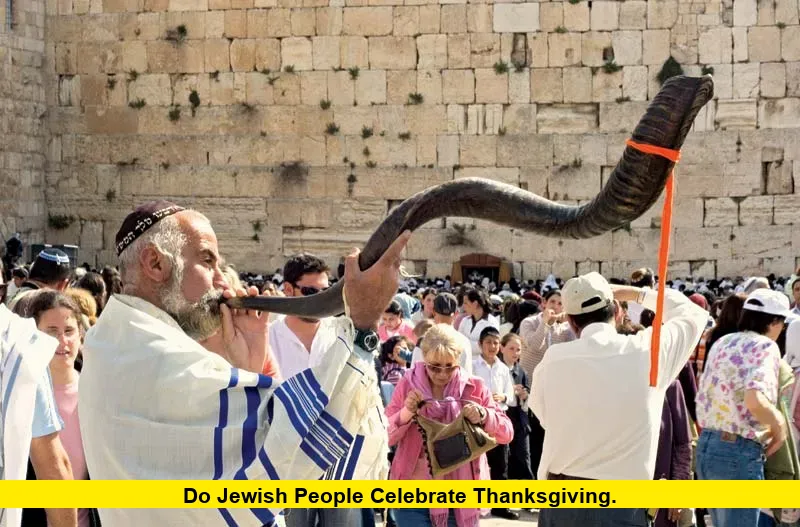
Thanksgiving is one of the most widely celebrated holidays in the United States, bringing families and friends together for meals, gratitude, travel, football, and longstanding traditions. But do Jewish people celebrate Thanksgiving? The answer is yes—many Jewish Americans celebrate Thanksgiving just like other Americans, while others choose not to observe it for religious, cultural, or personal reasons.
Thanksgiving is not a Jewish religious holiday, and it does not appear on the Jewish religious calendar. However, its central theme of gratitude has a strong connection to Jewish values. For many Jewish families, Thanksgiving offers an opportunity to appreciate family, community, freedom, food, and the blessings of everyday life.
The way Jewish people observe Thanksgiving varies considerably. Some prepare a traditional turkey dinner, invite relatives and friends, watch football, and participate in community activities. Others may attend synagogue events, prepare a kosher Thanksgiving meal, volunteer, or treat the day like an ordinary Thursday.
Understanding the relationship between Thanksgiving and Jewish tradition helps explain why the holiday is embraced by many Jewish Americans even though it is not part of Judaism’s formal religious observances.
Is Thanksgiving a Jewish Holiday?
Thanksgiving is not an official Jewish religious holiday. Unlike Passover, Rosh Hashanah, Yom Kippur, Hanukkah, or Sukkot, it is not based on the Hebrew calendar and does not have prescribed religious rituals that Jewish people are required to observe.
Thanksgiving is primarily an American civic and cultural holiday. It is celebrated by people from different religious backgrounds, including Christians, Jews, Muslims, Hindus, Buddhists, people of other faiths, and those who do not identify with a religion.
For Jewish Americans, the distinction between a religious holiday and a national celebration is important. Many see Thanksgiving as a uniquely American tradition rather than a religious observance associated with another faith.
That distinction is one reason Thanksgiving has become widely accepted in much of the American Jewish community.
The Reform Jewish movement, for example, recognizes participation in secular and civic holidays and offers resources for bringing Jewish values into Thanksgiving celebrations. Jewish families may use the occasion to reflect on gratitude, generosity, justice, family, and responsibility toward others.
Why Many Jewish Americans Celebrate Thanksgiving
Thanksgiving’s central theme of giving thanks is compatible with many Jewish teachings. Gratitude is an important part of Jewish religious life, and expressions of appreciation are incorporated into prayers, blessings, and daily practices.
Many Jewish Americans view Thanksgiving as an opportunity to celebrate their American identity while maintaining their Jewish identity.
Several reasons explain why Jewish families participate in Thanksgiving:
- Gratitude: Thanksgiving encourages people to recognize blessings and express appreciation.
- Family traditions: The holiday provides an opportunity for relatives to gather, particularly when family members live in different cities or states.
- American identity: Many Jewish Americans consider Thanksgiving an important national tradition.
- Community: The holiday can bring friends, neighbors, and people from different backgrounds together.
- Charitable activities: Some families use Thanksgiving as an opportunity to donate food, volunteer, or help people facing hardship.
- Cultural participation: Thanksgiving allows Jewish families to participate in a broadly American tradition without abandoning their own customs.
For many households, celebrating Thanksgiving does not conflict with Jewish religious identity. Instead, the holiday can become another opportunity to practice gratitude and kindness.
How Thanksgiving Connects With Jewish Values
Gratitude is deeply rooted in Jewish tradition. Jewish prayers frequently acknowledge the importance of life, food, health, community, and the opportunity to experience another day.
One important Jewish concept is hakarat hatov, commonly translated as recognizing the good or acknowledging goodness. The idea encourages people to notice blessings and express appreciation rather than taking everything for granted.
Thanksgiving can provide a practical opportunity to apply that principle.
A Jewish family celebrating Thanksgiving might pause before dinner to reflect on the people who have supported them throughout the year. Family members may share what they are grateful for, offer prayers, or discuss ways to help others.
The holiday can also encourage gratitude for freedom, safety, education, opportunities, and the ability to practice religion openly.
These themes can be particularly meaningful to Jewish Americans whose families immigrated to the United States in search of safety, religious freedom, economic opportunity, or a better future.
Do Jewish Families Eat Turkey on Thanksgiving?
Yes. Many Jewish families eat turkey on Thanksgiving, just as millions of other Americans do.
Turkey is not prohibited by Jewish dietary law simply because it is associated with Thanksgiving. However, Jewish families who keep kosher must ensure that the turkey and other foods meet their dietary requirements.
Kosher Thanksgiving meals may involve several considerations:
- Turkey must be kosher-certified and prepared according to kosher requirements.
- Meat and dairy foods cannot be served or consumed together under traditional kosher dietary laws.
- Gravy, stuffing, sauces, desserts, and other ingredients must be checked for kosher compliance.
- Families using separate meat and dairy kitchen equipment may need to plan preparation carefully.
- Some households serve pareve dishes, which contain neither meat nor dairy ingredients.
A kosher Thanksgiving dinner can still include many traditional dishes, such as turkey, cranberry sauce, vegetables, potatoes, stuffing, and pumpkin pie. Recipes and ingredients may simply be adjusted to comply with kosher requirements.
For Jewish families who do not keep kosher, Thanksgiving meals may look much like those of other American households.
What Does a Kosher Thanksgiving Dinner Look Like?
A kosher Thanksgiving meal can be very similar to a traditional American Thanksgiving dinner, although preparation and ingredient selection may differ.
Common dishes can include:
- Kosher turkey
- Roasted vegetables
- Sweet potatoes
- Potatoes
- Cranberry sauce
- Kosher stuffing
- Salads
- Challah or other bread
- Pumpkin pie prepared with kosher ingredients
- Pareve desserts
Some families incorporate Jewish foods into their Thanksgiving menu, creating a combination of American holiday dishes and traditional Jewish cuisine.
For example, Thanksgiving dinner may include challah stuffing, matzo ball soup, kugel, roasted vegetables seasoned with Middle Eastern spices, or other family recipes.
The menu can reflect the family’s Jewish heritage, regional traditions, personal preferences, and dietary practices.
Do Orthodox Jewish People Celebrate Thanksgiving?
The answer is more complicated within Orthodox Judaism because religious authorities have historically discussed whether Thanksgiving is permissible under Jewish law.
Many Orthodox Jewish families do celebrate Thanksgiving or enjoy a Thanksgiving meal. Some consider the holiday a secular American observance that does not conflict with Jewish law.
However, certain Orthodox authorities have expressed reservations about formally establishing Thanksgiving as an annual holiday or treating it as a religious celebration.
The discussion generally centers on whether Thanksgiving should be considered a secular national observance or a custom that resembles the adoption of non-Jewish holiday traditions.
Different rabbis and communities may interpret the issue differently. As a result, Thanksgiving practices among Orthodox Jewish families can vary.
Some families host elaborate Thanksgiving dinners. Others may eat a regular meal, avoid making the day into a formal holiday celebration, or follow the guidance of their rabbi.
This variation demonstrates that Jewish religious practice is not uniform across every community.
Do Reform, Conservative, and Other Jewish Communities Celebrate Thanksgiving?
Thanksgiving is widely embraced across many segments of American Jewish life, including Reform, Conservative, Reconstructionist, and other communities.
However, individual families and congregations may have their own traditions.
Some Reform Jewish communities encourage families to incorporate Jewish values into Thanksgiving celebrations. This may involve prayers of gratitude, discussions about justice and generosity, or opportunities to support people in need.
Conservative Jewish families may celebrate Thanksgiving with traditional meals, religious reflections, or family gatherings, while also maintaining their own interpretations of Jewish law and practice.
Reconstructionist and other Jewish communities may also approach Thanksgiving as an opportunity to celebrate community, gratitude, American identity, and social responsibility.
There is no single Thanksgiving practice that applies to every Jewish denomination or household.
How Jewish Families Celebrate Thanksgiving
Jewish Thanksgiving celebrations can look remarkably similar to those of other American families.
Many Jewish households celebrate with:
- Family dinners
- Turkey and traditional side dishes
- Football games
- Thanksgiving parades
- Traveling to visit relatives
- Hosting friends and neighbors
- Sharing gratitude around the dinner table
- Volunteering at food banks
- Donating to charitable organizations
- Preparing kosher versions of Thanksgiving recipes
Some families may also incorporate Jewish traditions into their gatherings.
A Thanksgiving dinner could include a blessing over food, Hebrew prayers, a discussion of Jewish teachings about gratitude, or a family tradition of sharing something meaningful from the past year.
Others simply enjoy the holiday without adding religious elements.
For many families, Thanksgiving is about spending time together rather than following a particular religious ceremony.
Do Jewish People Say Prayers on Thanksgiving?
Some Jewish people say prayers or blessings during Thanksgiving, but there is no universal Thanksgiving prayer that Jewish people are required to recite.
Families may choose to say a traditional Jewish blessing before eating, express gratitude in their own words, or include a brief reflection about the importance of appreciating life’s blessings.
Jewish prayer traditions already include many expressions of gratitude. Thanksgiving can provide an additional opportunity for families to connect those teachings with the American holiday.
Some families may invite everyone at the table to share something they are thankful for. Others may discuss family milestones, personal achievements, health, relationships, or community support.
Jewish organizations and congregations have also developed resources for bringing Jewish values into Thanksgiving observances. These may include prayers, readings, discussion questions, charitable activities, and suggestions for making the holiday more meaningful.
Thanksgiving and Jewish History in America
Jewish participation in Thanksgiving has a long history in the United States.
Jewish communities have lived in America since the colonial period, and over time, Thanksgiving became part of the country’s broader cultural traditions.
During the 19th century, Jewish congregations sometimes held Thanksgiving services. These services allowed Jewish Americans to participate in national celebrations while expressing gratitude through their own religious traditions.
The holiday also became an opportunity to discuss the relationship between Judaism and American civic life.
Jewish leaders and communities have historically emphasized the importance of religious freedom, citizenship, community participation, and the ability to maintain Jewish identity while being part of American society.
For many Jewish Americans, Thanksgiving represents a moment to appreciate both their religious heritage and the opportunities associated with living in the United States.
Readers interested in the historical background of the American holiday can also learn more about the First Thanksgiving and how the 1621 harvest gathering became part of America’s Thanksgiving tradition.
Why Some Jewish People Do Not Celebrate Thanksgiving
Although many Jewish Americans celebrate Thanksgiving, not everyone does.
Some Jewish people choose not to observe the holiday because of religious interpretations, personal preferences, family traditions, or concerns about the historical narrative associated with Thanksgiving.
Certain religious authorities have questioned whether establishing Thanksgiving as an annual celebration is appropriate under Jewish law. Others have argued that a secular national holiday is different from a religious holiday and therefore presents no religious problem.
There are also Jewish Americans who do not celebrate Thanksgiving because they prefer not to participate in the holiday’s traditional festivities.
Some may work through the day, have no family gathering planned, or simply treat Thanksgiving as an ordinary day.
Additionally, Thanksgiving’s historical connection to colonization and Indigenous peoples has led some people to reconsider how they approach the holiday. Jewish individuals and families may participate in Thanksgiving while also learning about Native American history, acknowledging Indigenous perspectives, and supporting Indigenous communities.
Jewish people, like other Americans, have different views about the holiday’s history and meaning.
Do Jewish People Celebrate Thanksgiving With Non-Jewish Friends?
Yes. Many Jewish Americans celebrate Thanksgiving with non-Jewish friends, relatives, neighbors, coworkers, and other members of their communities.
Thanksgiving is generally considered a shared American holiday rather than a religious celebration restricted to a particular faith.
Jewish families may attend Thanksgiving dinners hosted by Christian, Muslim, secular, or other families. They may also invite people from different backgrounds to their own homes.
The holiday can provide an opportunity for interfaith friendship and cultural exchange.
When dietary requirements are involved, hosts may ask guests whether they keep kosher or have other food restrictions. Being thoughtful about ingredients and food preparation can help ensure that everyone feels welcome.
The central focus of Thanksgiving for many Jewish Americans is not religious affiliation but gratitude, friendship, hospitality, and spending time with loved ones.
Thanksgiving and the Jewish Holiday of Sukkot
Thanksgiving and Sukkot are sometimes compared because both are associated with gratitude, food, harvest themes, and appreciation for life’s blessings.
However, Sukkot is a Jewish religious holiday, while Thanksgiving is an American civic and cultural holiday.
Sukkot is celebrated according to the Hebrew calendar and includes specific religious practices, such as dwelling in a sukkah, a temporary structure traditionally used during the festival.
Thanksgiving, by contrast, is celebrated on the fourth Thursday of November in the United States.
The two holidays are not the same, and Thanksgiving is not a Jewish festival. Nevertheless, some people have noted similarities in their themes of harvest, gratitude, and communal celebration.
These similarities may help explain why Thanksgiving feels culturally comfortable for many Jewish Americans.
Can Jewish People Celebrate Thanksgiving if They Keep Kosher?
Yes. Keeping kosher does not automatically prevent someone from celebrating Thanksgiving.
Jewish families who observe kosher dietary laws can prepare a Thanksgiving meal using kosher-certified ingredients and appropriate cooking practices.
The main considerations involve food preparation rather than the holiday itself.
For example, a kosher Thanksgiving menu may feature a kosher turkey, meat-compatible side dishes, vegetables, cranberry sauce, and a pareve dessert. Families may also use separate utensils, cookware, and serving equipment according to their kitchen practices.
People invited to a Thanksgiving dinner by someone who does not keep kosher should communicate their dietary needs respectfully and in advance.
Kosher observance can vary in strictness and interpretation, so it is helpful to ask guests what arrangements would make them comfortable rather than assuming that every Jewish person follows the same dietary practices.
How Thanksgiving Is Celebrated in Jewish Communities Across the United States
Thanksgiving traditions among Jewish Americans vary by region, community, and family background.
New York and the Northeast
New York has one of the largest Jewish populations in the United States. Thanksgiving celebrations may include large family gatherings, kosher restaurants and catering, synagogue-related community activities, and traditional holiday meals.
Some families travel between boroughs, suburbs, and neighboring states to reunite with relatives.
Florida
Florida’s Jewish communities often include retirees, families, seasonal residents, and people who have relocated from other parts of the country.
Thanksgiving can bring families together from across the United States, particularly in South Florida and other areas with significant Jewish populations.
California
Jewish families throughout California may celebrate Thanksgiving through family meals, community volunteering, synagogue activities, and a combination of traditional American and Jewish dishes.
In cities with diverse populations, Thanksgiving gatherings may include friends from multiple cultural and religious backgrounds.
Chicago and the Midwest
Jewish communities in Chicago and other Midwestern cities may combine Thanksgiving traditions with regional food preferences, family gatherings, community events, and charitable activities.
Texas and the South
Jewish Americans in Texas and other Southern states may celebrate Thanksgiving with traditional regional foods alongside Jewish culinary customs.
The holiday can also serve as an opportunity for Jewish families to gather with neighbors and participate in local community activities.
Although traditions differ geographically, the common theme is that Jewish Thanksgiving celebrations are shaped by family customs, American culture, religious observance, and personal preferences.
Is Thanksgiving a Time for Jewish Charity and Community Service?
For many Jewish Americans, Thanksgiving is an opportunity to put gratitude into action.
Jewish teachings emphasize helping people in need, caring for the vulnerable, and contributing to the community. Thanksgiving can provide a practical opportunity to reflect on these responsibilities.
Some Jewish families volunteer at food banks, community kitchens, homeless shelters, and charitable organizations during the Thanksgiving season. Others donate groceries, organize food drives, support families experiencing financial hardship, or invite people who might otherwise spend the holiday alone.
Community organizations and synagogues may also organize Thanksgiving-related service projects.
These activities can reflect the Jewish concept of tzedakah, often translated as charity but understood more broadly as an obligation to support others and pursue justice.
For some Jewish families, Thanksgiving becomes especially meaningful when gratitude is combined with generosity.
What Is the Jewish Perspective on Gratitude?
Gratitude is not limited to Thanksgiving in Jewish tradition.
Jewish religious life includes blessings and prayers that acknowledge appreciation for food, life, health, creation, and everyday experiences. Many Jewish people begin and end their day with expressions of gratitude or participate in prayers that recognize blessings.
This emphasis means that Thanksgiving’s central message can resonate with Jewish teachings throughout the year.
The holiday may provide an additional opportunity to discuss gratitude, but Jewish tradition does not require Jewish people to wait until November to express thanks.
For many Jewish Americans, Thanksgiving simply reinforces a value that is already part of their daily religious and personal lives.
Readers interested in Jewish approaches to secular holidays and gratitude can explore Reform Judaism’s guidance on celebrating secular holidays and its discussion of ways to incorporate Jewish values into Thanksgiving.
Do Jewish People Celebrate Thanksgiving in 2026?
Yes. Many Jewish Americans are expected to celebrate Thanksgiving in 2026, which falls on Thursday, November 26.
As in previous years, families may gather for dinner, prepare traditional foods, travel to visit relatives, attend community events, or volunteer.
Thanksgiving is not a Jewish religious holiday in 2026 or any other year. Its date is determined by the U.S. calendar rather than the Hebrew calendar.
Some Jewish families may also have their own schedules based on religious observance, work, school, or family circumstances.
The holiday remains a widely shared American celebration, and Jewish Americans participate in many different ways.
Could Thanksgiving Ever Overlap With Hanukkah?
Thanksgiving and Hanukkah follow different calendars.
Thanksgiving is always celebrated on the fourth Thursday of November, while Hanukkah begins on the 25th day of Kislev according to the Hebrew calendar.
Because the Hebrew calendar is lunar-based and the Gregorian calendar is solar-based, Hanukkah’s dates change from year to year in the Gregorian calendar.
The two holidays occasionally overlap, creating a combination of Thanksgiving traditions and Hanukkah celebrations. Such overlaps are unusual, which can make them particularly memorable for Jewish families.
When Thanksgiving and Hanukkah occur near each other, families may combine traditions, serve holiday foods from both celebrations, light Hanukkah candles when appropriate, and organize gatherings that recognize both occasions.
The unusual calendar overlap can create opportunities for family celebrations that bring together Jewish religious traditions and American Thanksgiving customs.
The Bottom Line
Yes, many Jewish people celebrate Thanksgiving, but it is not a Jewish religious holiday and observance is not universal. For many Jewish Americans, Thanksgiving is a secular national celebration that offers an opportunity to spend time with family, express gratitude, enjoy a meal, and appreciate life in the United States.
The holiday’s emphasis on thankfulness aligns naturally with Jewish values, including gratitude, generosity, community, hospitality, and helping others. Jewish families may celebrate with traditional Thanksgiving foods, kosher meals, prayers, charitable activities, or gatherings with friends and relatives.
At the same time, some Jewish people choose not to observe Thanksgiving because of religious interpretations, personal beliefs, or concerns about its historical background.
The diversity of Jewish Thanksgiving traditions reflects the broader diversity of Jewish life in America. For many Jewish Americans, Thanksgiving is not about adopting another religion’s holiday—it is about participating in an American tradition while honoring their own faith, culture, family, and values.
Do you celebrate Thanksgiving, or do you have a different tradition for expressing gratitude? Share your thoughts and stay updated on more holiday stories and cultural insights.