Did DoorDash buy Instacart? On October 29, 2026, DoorDash announced a definitive agreement to acquire Instacart in a transaction valued at approximately $17 billion. The deal marks a major consolidation in the U.S. grocery and food delivery sector. Both companies’ boards approved the agreement. DoorDash will pay $65 per share for Instacart, a 26% premium over Instacart’s closing price on October 22, 2026. That date came before media reports of sale talks surfaced. The equity value reaches roughly $17 billion. At least 75% of the consideration will come in cash. Instacart stockholders can elect all cash, DoorDash stock at a rate of 0.3372 shares per Instacart share, or a mix of $48.75 cash plus 0.0843 DoorDash shares. Stock is capped at 25% of the total consideration, with proration if oversubscribed. DoorDash plans to fund the cash portion with cash on hand and debt, including a 364-day bridge loan facility from JPMorgan Chase. The transaction does not depend on financing. DoorDash targets an investment-grade capital structure.
The companies expect the deal to close at the end of 2027 or in the first half of 2028. Closing requires Instacart stockholder approval, expiration of the Hart-Scott-Rodino waiting period, other regulatory clearances in the United States, Canada, and Israel, and customary conditions. Stockholders holding about 19% of Instacart shares have already agreed to vote in favor. Until closing, DoorDash and Instacart will operate as separate and independent companies. After closing, DoorDash expects to retain the Instacart brand, its enterprise technology products, and its app. Instacart shoppers can continue fulfilling orders. Local grocers can choose any delivery platform.
Background on the Two Companies
Instacart, legally Maplebear Inc., launched in 2012. It specializes in grocery and convenience delivery across the United States and Canada. The company partners with more than 2,200 retail banners representing nearly 100,000 stores. Roughly 600,000 independent contractor shoppers completed 338 million orders in the prior year. Instacart went public in 2023 after a pandemic-era surge in online grocery demand. Its trailing twelve-month revenue stands near $4 billion. Market capitalization recently hovered around $13.5 billion to $14 billion. In the third quarter of 2026, Instacart reported gross transaction value of $10.528 billion, up 15% year-over-year, with 91.4 million orders, up 10%. Total revenue reached $1.095 billion, up 17%. Adjusted EBITDA hit $342 million, up 23%.
DoorDash, founded in San Francisco in 2013, began as a restaurant delivery service. It has expanded into grocery, retail, convenience, and other categories. The company operates in more than 40 countries through brands that include DoorDash, Deliveroo, and Wolt. It has facilitated over 10 billion orders, $230 billion in merchant sales, and $80 billion in Dasher earnings. In the third quarter of 2026, DoorDash reported 993 million total orders, up 28% year-over-year. Marketplace gross order value reached $33.9 billion, up 36%. Revenue climbed 34% to $4.6 billion. GAAP net income attributable to common stockholders rose 91% to $466 million. Adjusted EBITDA increased 41% to $1.06 billion. DoorDash’s market capitalization stood near $73 billion. It has reported strong growth in grocery and retail alongside its core restaurant business.
Strategic Rationale for the Combination
DoorDash CEO Tony Xu described grocery as one of the hardest categories to get right online. Someone must select a ripe avocado, find a suitable substitute, and deliver ice cream before it melts. Instacart has built expertise in grocery technology and retailer relationships over 14 years. DoorDash brings a large delivery network and logistics capabilities. The combined company aims to offer grocers and retailers of every size DoorDash’s delivery network plus Instacart’s grocery and fulfillment technology. This includes tools for their own websites, advertising, and AI capabilities. Large retailers build their own fleets, warehouses, and memberships. Smaller stores often cannot. The deal seeks to help local businesses compete online and keep more dollars in local communities. Instacart CEO Chris Rogers noted that combining purpose-built grocery technology and retailer relationships with DoorDash’s consumer reach and logistics can create new opportunities for partners, improve experiences for customers and shoppers, and deliver value for shareholders.
Benefits for Consumers, Workers, and Stores
Consumers stand to gain more choice. Instacart customers could access more than 50,000 additional stores on top of the nearly 100,000 already on the Instacart platform. Faster delivery options and more affordable local shopping become available. DashPass and Instacart+ members will pay one membership fee instead of two. The companies estimate this saves customers roughly $100 million per year on membership fees alone. More stores in communities and enhanced competition on Main Street form part of the stated goals.
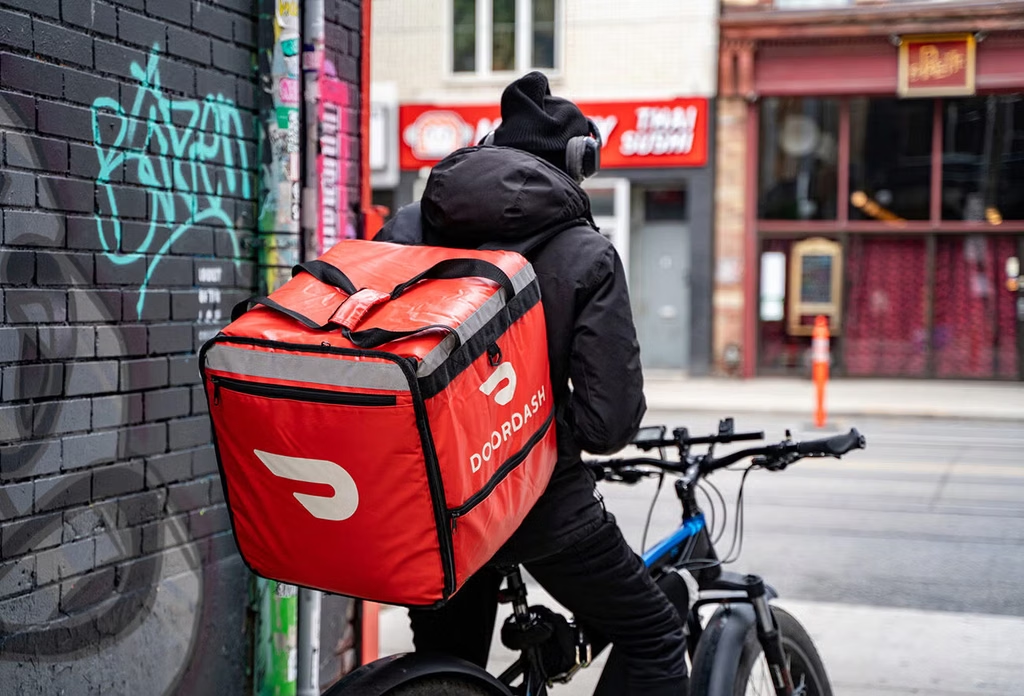
Dashers and Instacart shoppers receive more earnings opportunities and flexibility. They can choose grocery work on quieter days or restaurant deliveries during peak times. Instacart shoppers keep preferred features such as flexibility in the amount of work, information on batches, and the choice to accept DoorDash orders or remain on Instacart. Stores and brands gain a scaled way to reach customers online. They can generate more sales and advertising revenue through Instacart’s technology. DoorDash’s DashMart Fulfillment Services can add capacity for faster, more accurate, and more affordable delivery. The companies committed to an open platform with no grocery exclusivity. Local grocers remain free to work with any delivery service.
Competitive Context in Grocery and Delivery
The acquisition occurs amid intense competition. Amazon continues expanding same-day grocery service across thousands of locations. Walmart offers rapid delivery in many markets. Uber has expanded grocery offerings, including a recent Costco partnership. Online grocery has grown steadily. Nearly 150 million Americans shopped for groceries online as of 2025. Most grocery spending still happens in stores, yet online growth requires reliable, affordable delivery. DoorDash has gained share in overall U.S. delivery-app spending. Consumer Edge data showed DoorDash at about 59% of spending on major delivery apps in the third quarter of 2026, up from 44% five years earlier. Instacart’s share declined from 26% to 18% over the same period. Uber Eats held roughly 20%. Combining the platforms would increase scale in third-party grocery delivery while DoorDash maintains its restaurant delivery lead.
Past discussions between the companies occurred around 2021 at a much higher valuation for Instacart, but they did not advance. Recent reports indicated Instacart explored a sale and held preliminary talks with potential buyers including DoorDash and Uber. Uber talks ended before the DoorDash agreement. The current deal reflects consolidation trends in delivery. DoorDash previously acquired Deliveroo. Other transactions have reshaped the sector over recent years.
Financial and Operational Details
Instacart’s advertising and other revenue formed a meaningful portion of its business, totaling hundreds of millions in recent quarters. The deal gives DoorDash access to Instacart’s retail media capabilities alongside its own. Both companies reported solid third-quarter results on the announcement day. DoorDash shares rose in pre-market trading after the news and earnings beat. Instacart shares traded near recent levels in early activity. The premium reflects the strategic value of combining networks and technology. Advisors include Centerview Partners and J.P. Morgan for DoorDash, with Latham & Watkins as legal counsel. Instacart used Goldman Sachs as financial advisor and Cravath, Swaine & Moore and Cooley as legal counsel.
Timeline, Approvals, and Considerations
The multi-year path to closing gives time for integration planning while the companies remain independent. Regulatory review forms a key step. The Hart-Scott-Rodino Act process applies in the United States. Approvals are also needed in Canada and Israel. Some observers and groups have noted potential scrutiny due to the companies’ positions in third-party grocery delivery. The American Economic Liberties Project urged regulators to examine the deal closely, citing concerns about market concentration in that segment. New York City’s Department of Consumer and Worker Protection referenced a trend of consolidation in a statement ahead of the announcement. Analysts have discussed market definition as important: the companies hold a small share of overall grocery sales but a larger share of online and pure-play delivery. DoorDash stated that local grocers can continue choosing any platform. The companies will file materials with the SEC, including a registration statement on Form S-4 containing a proxy statement and prospectus.
What the Deal Means for Users Right Now
Nothing changes immediately for customers or workers. Apps and services continue as before. Memberships remain separate until closing. Orders, shopping, and delivery operate under existing systems. Once closed, users could see expanded store selection and simplified membership options. Stores gain more tools to compete online. Workers retain flexibility and gain additional earning paths. The companies emphasize that more local shopping keeps more dollars local. Grocery delivery remains early in its long-term potential. Combining specialized grocery technology with a broad logistics network aims to improve reliability and affordability for everyday needs.
DoorDash and Instacart have built complementary strengths over more than a decade each. The announced agreement seeks to accelerate innovation in online grocery while expanding choice for consumers and support for local retailers. The path ahead includes stockholder votes, regulatory reviews, and detailed planning. Markets and users will watch how the combination develops through the expected closing window.
What do you think of DoorDash’s plan to acquire Instacart? Share your comments below and stay updated as the process moves forward.