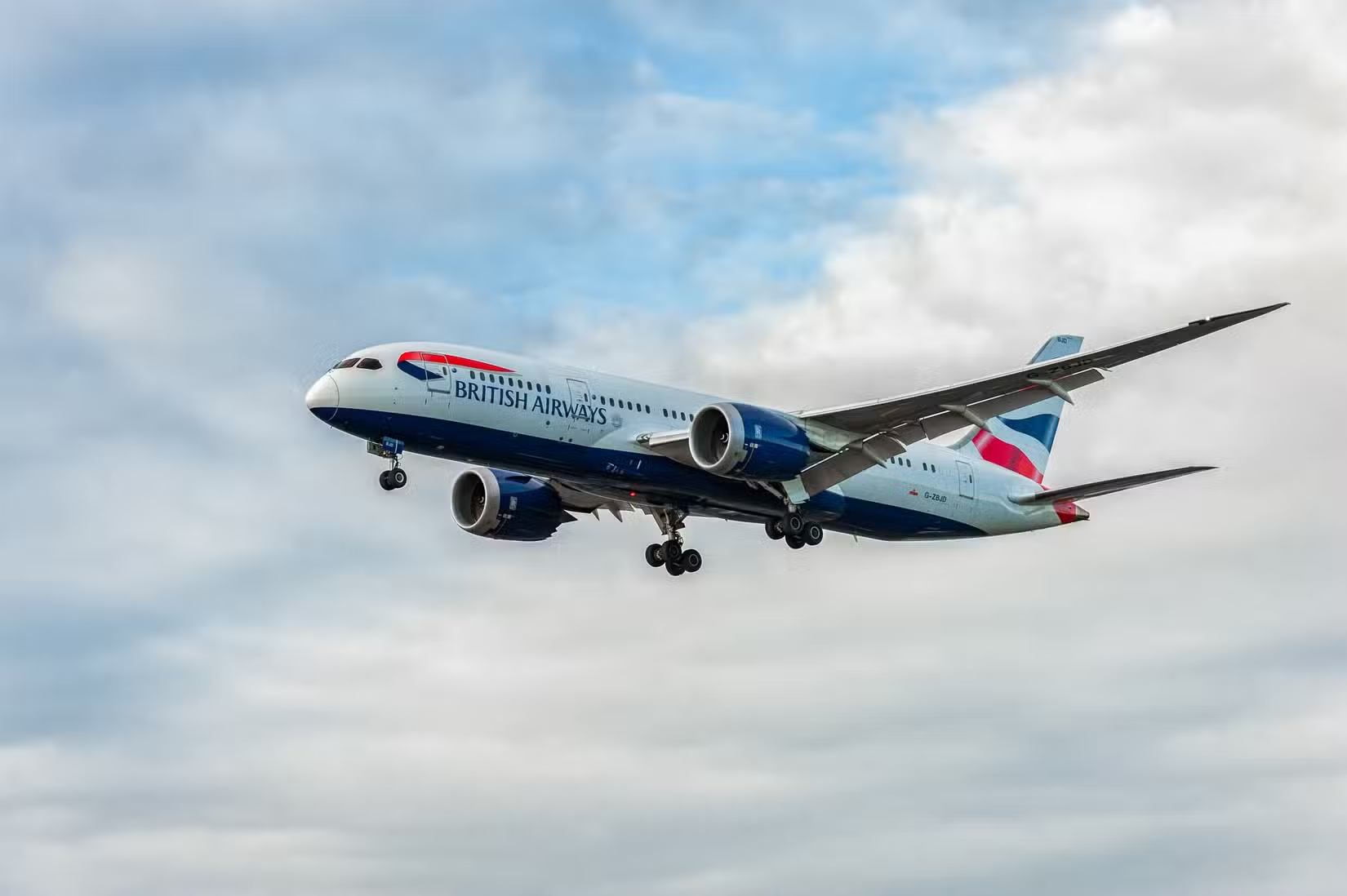
The British Airways Boeing 787 Pittsburgh grounded situation has drawn attention after a Boeing 787-8 Dreamliner reportedly remained at Pittsburgh International Airport for more than 70 days following a ground-handling incident in August 2026. The aircraft, registered as G-ZBJF, arrived from London Heathrow on Flight BA171 and has not returned to regular passenger service, according to recent aviation reports published on November 9, 2026.
The prolonged grounding has raised questions about the extent of the reported damage, the complexity of repairing the aircraft, and when British Airways might return the Dreamliner to service. Reports indicate that ground-handling equipment may have struck the underside of the aircraft, potentially creating a significant structural repair challenge. However, British Airways has not publicly confirmed the precise circumstances of the incident, released a detailed damage assessment, or announced an official return-to-service date.
The latest available information points to an ongoing aircraft recovery and maintenance situation rather than a confirmed timeline for the aircraft’s return. Understanding what is known, what remains unverified, and how such repairs work provides important context for this developing aviation story.
British Airways Boeing 787 Remains Grounded at Pittsburgh International Airport
The aircraft at the center of the incident is a Boeing 787-8 Dreamliner operated by British Airways. Its registration, G-ZBJF, has been identified in recent aircraft-tracking reports covering the prolonged stay at Pittsburgh International Airport in Pennsylvania.
The aircraft arrived from London Heathrow on August 28, 2026, operating as BA171. Instead of returning to commercial service after completing the transatlantic flight, it remained at Pittsburgh.
By November 9, the aircraft had been out of regular operation for more than 70 days. That is an unusually long period for an aircraft to remain away from its normal flying schedule following a reported ground-handling incident, although the precise engineering circumstances have not been confirmed by the airline.
Pittsburgh is an important airport for international passenger operations, cargo traffic, and aircraft ground services. However, an aircraft experiencing substantial structural damage may require specialist inspections, replacement components, and repair procedures that cannot be completed as quickly as routine maintenance.
The extended grounding of G-ZBJF has therefore attracted attention from aviation observers tracking British Airways’ fleet and the operational status of its long-haul aircraft.
It is important to distinguish between the aircraft’s reported location and the reason for its continued absence from service. Aircraft-tracking information can establish that a plane has not flown for an extended period, but it does not independently establish the full extent of damage or the progress of engineering work.
As of the latest available reporting, there is no officially confirmed date for G-ZBJF to return to commercial operations.
What Happened to the British Airways Boeing 787 in Pittsburgh?
Recent aviation reports attribute the aircraft’s prolonged grounding to a reported collision involving ground-handling equipment after its arrival in Pittsburgh.
According to those reports, a mobile baggage belt loader may have struck the underside of the aircraft near one of its lower cargo doors. Belt loaders are commonly used by airport ground crews to move baggage and other items into and out of an aircraft’s cargo compartment.
The reported impact may have damaged the aircraft’s lower fuselage. Some accounts describe an opening in the exterior skin beneath a cargo door, although the precise location and severity of the damage have not been independently confirmed by British Airways.
A collision involving ground-service equipment can create a maintenance problem even when an aircraft is stationary. The severity depends on the force of the impact, the location of the contact, and whether the damage extends beyond the outer surface into load-bearing structural components.
For a widebody aircraft such as the Boeing 787-8, engineers must establish whether the damage affects the fuselage structure, cargo compartment, nearby systems, or other components before determining the appropriate repair procedure.
British Airways has not published a comprehensive account of what happened to G-ZBJF in Pittsburgh. Consequently, the reported belt-loader collision should be treated as the leading explanation in current aviation coverage, rather than as a fully documented official account.
There is also no confirmed public engineering report establishing the complete extent of the damage.
Why the Boeing 787 Dreamliner Repair Could Take Months
One of the most important aspects of the British Airways Boeing 787 Pittsburgh grounded story is the technical work that may be required to return the aircraft to an airworthy condition.
The Boeing 787 Dreamliner uses a substantial amount of advanced composite material in its primary structure. These materials help reduce weight and improve resistance to corrosion, but they also require specific inspection and repair methods when structural damage occurs.
A damaged aircraft cannot simply be cleared for flight because the visible opening has been covered or repaired. Maintenance specialists must determine whether the surrounding structure remains sound and whether the repair meets the aircraft manufacturer’s approved engineering requirements.
Several stages may be involved in a structural repair.
- Damage assessment: Engineers inspect the affected area to determine the location, dimensions, and depth of the damage.
- Structural inspection: Specialists assess whether the impact has affected underlying composite layers, structural reinforcements, or nearby systems.
- Repair planning: The maintenance team establishes an appropriate repair method using approved technical procedures.
- Repair and inspection: Technicians carry out the necessary work and verify that the repaired structure meets applicable requirements.
- Airworthiness approval: The aircraft must satisfy the relevant technical and regulatory requirements before it can return to flight.
The actual process depends on the damage identified during inspection. A relatively limited repair may require less work than damage involving multiple structural layers or adjacent aircraft systems.
The aircraft’s location can also influence the timeline. If a particular repair requires specialist equipment, additional engineering support, or components that are not readily available at Pittsburgh, the recovery process may become more complicated.
However, the specific repair procedure being used on G-ZBJF has not been publicly confirmed. It would therefore be premature to attribute the entire delay to one particular technical problem.
Possible Landing Gear Complications Remain Unconfirmed
Some recent reports have raised the possibility that the aircraft could also have experienced landing gear complications during the repair process.
The claim has been attributed to an online commenter who reportedly identified themselves as a British Airways engineer. The account suggested that repair work had progressed but encountered further difficulties involving the landing gear.
That information has not been independently verified, and British Airways has not publicly confirmed that G-ZBJF sustained landing gear damage.
This distinction matters because the landing gear is a critical safety system. If it were damaged, engineers would need to inspect the relevant components and establish whether they could safely support the aircraft during taxiing, takeoff, and landing.
Even if the initial fuselage damage could be repaired, a separate issue affecting the landing gear could prevent the aircraft from returning to service.
Nevertheless, it would be inaccurate to present landing gear damage as an established fact in this case. The available reporting does not provide a verified technical assessment that confirms such damage or explains whether it has contributed to the prolonged grounding.
For now, the confirmed picture is limited: G-ZBJF has remained at Pittsburgh for an extended period, and the complete reasons for the delay have not been officially detailed.
Could British Airways Move the Aircraft to Another Maintenance Facility?
Another question surrounding the grounded Dreamliner is whether the aircraft will remain at Pittsburgh until all repairs are completed or be moved to another location.
Recent aviation reports have mentioned Cincinnati/Northern Kentucky International Airport as a possible destination for further maintenance. The airport is associated with specialist aircraft maintenance operations, including facilities operated by FEAM Aero.
Boeing’s facilities in the Seattle area have also been mentioned as a potential destination for specialist work.
Neither destination has been confirmed by British Airways as the aircraft’s planned repair location. These possibilities should not be interpreted as an announced relocation plan.
Moving a damaged aircraft to another maintenance facility is not as simple as scheduling an ordinary flight. Engineers must first determine whether the aircraft can be made safe to fly for that specific journey.
If it cannot meet all the requirements for a standard flight but can be operated safely under specifically approved conditions, a special flight permit may be relevant. In the United States, the Federal Aviation Administration has a process for issuing special flight permits when the applicable conditions are satisfied.
Such permission is not automatic. The aircraft must meet the requirements associated with the proposed flight, and any necessary repairs, restrictions, inspections, and authorizations must be addressed.
A relocation could provide access to additional specialist resources, but it would also involve engineering planning and regulatory coordination. Whether that approach is appropriate for G-ZBJF depends on its actual condition.
Until British Airways provides further information, the aircraft’s eventual repair location and method of return remain uncertain.
G-ZBJF’s Previous Extended Maintenance Period at Cardiff
The Pittsburgh grounding is particularly notable because G-ZBJF reportedly spent several months away from regular passenger operations before the latest incident.
Aircraft-tracking records indicate that the Dreamliner arrived at Cardiff Airport in Wales in December 2025 and remained there until August 2026. Cardiff is used for British Airways maintenance activities.
The aircraft reportedly left Cardiff on August 6, 2026, and returned to commercial flying shortly afterward. It then operated the London Heathrow-to-Pittsburgh service on August 28 before becoming grounded following the reported ground-handling incident.
The timeline highlights how little time the aircraft had spent back in regular operations before its latest prolonged absence.
| Date | Reported aircraft activity |
|---|---|
| December 19, 2025 | G-ZBJF arrives at Cardiff Airport for an extended maintenance period. |
| August 6, 2026 | The aircraft departs Cardiff following its extended stay. |
| August 7, 2026 | The Dreamliner reportedly returns to commercial operations. |
| August 28, 2026 | It operates British Airways Flight BA171 from London Heathrow to Pittsburgh. |
| November 9, 2026 | Recent reports continue to identify the aircraft as grounded at Pittsburgh. |
The reason for the earlier Cardiff maintenance period should not be confused with the reported Pittsburgh incident. The available information does not establish that the two periods were related.
Similarly, an extended stay at a maintenance facility does not, by itself, indicate a safety defect. Aircraft undergo scheduled checks, repairs, and other maintenance activities throughout their operational lives.
The significance of this timeline is that G-ZBJF experienced two substantial periods away from regular flying within a relatively short interval.
How the Grounding May Affect British Airways’ Long-Haul Fleet
British Airways operates a widebody fleet that includes Boeing 787-8, 787-9, and 787-10 Dreamliners, alongside other long-haul aircraft types.
The 787-8 is used on long-distance routes where its range, passenger capacity, and fuel efficiency can support international operations. An aircraft that remains unavailable for several weeks or months cannot contribute to the airline’s scheduled flying capacity.
When a long-haul aircraft becomes unavailable, an airline may have to adjust how it allocates its remaining fleet. Depending on the circumstances, this can involve changing aircraft assignments, using available spare capacity, modifying maintenance plans, or making operational adjustments.
However, the grounding of one aircraft does not automatically mean that passengers will experience widespread cancellations.
Airlines generally plan their operations around maintenance requirements and the availability of aircraft, although unexpected technical problems can place additional pressure on those plans.
As of November 9, 2026, the available reports do not establish that G-ZBJF’s grounding has directly caused a specific set of flight cancellations or a wider disruption across British Airways’ network.
Passengers should therefore avoid assuming that a particular route is affected solely because this aircraft remains grounded.
Travelers with upcoming British Airways reservations can check their individual flight status and aircraft assignment through the airline’s normal channels. Aircraft assignments can change, and the plane originally scheduled for a service is not necessarily the aircraft that will ultimately operate it.
The Financial and Operational Costs of a Grounded Dreamliner
Keeping a widebody passenger aircraft out of service for more than two months can create substantial costs for an airline.
Potential expenses include structural repairs, specialist engineering support, replacement parts, inspections, aircraft parking, and the operational consequences of having one fewer aircraft available.
If a repair requires equipment or personnel to travel to the aircraft, additional logistical expenses may arise. Moving the plane to another facility, if necessary and approved, could introduce further costs.
There may also be an opportunity cost because the aircraft cannot operate scheduled passenger services while it remains unavailable.
However, the total financial impact of the Pittsburgh grounding has not been officially disclosed. There is no confirmed public breakdown of the repair bill, insurance arrangements, parking charges, or lost operating revenue associated with G-ZBJF.
Without verified financial information, assigning a specific dollar amount to the incident would be misleading.
Insurance may cover certain eligible losses, depending on the policy and circumstances, but the existence and extent of any coverage in this case have not been publicly established.
The overall cost will depend on the final damage assessment, the repair method, the time needed to complete the work, and the operational arrangements British Airways makes while the aircraft remains unavailable.
Latest Update on the British Airways Boeing 787 Pittsburgh Grounding
As of November 9, 2026, recent aviation reporting continues to identify G-ZBJF as grounded at Pittsburgh International Airport after more than 70 days away from commercial operations.
The leading reported explanation remains a ground-handling incident involving equipment that may have damaged the underside of the aircraft. The possible extent of the structural damage, the status of the repairs, and reports of additional landing gear complications have not been fully verified through an official technical statement.
The airline has not announced a confirmed return-to-service date. Nor is there an officially confirmed plan identifying Cincinnati, Seattle, or another airport as the aircraft’s eventual repair destination.
These outstanding details are important because the duration of an aircraft grounding depends on the engineering findings and the work required to meet airworthiness standards. A reliable return date cannot be calculated from the number of days the aircraft has already spent on the ground.
Further developments may clarify whether the repairs can be completed at Pittsburgh or whether a specially authorized transfer to another maintenance location will be considered.
Until more information becomes available, the most accurate assessment is that the Dreamliner remains out of regular service, while its final repair timeline is unknown.
Final Thoughts on the Grounded British Airways Dreamliner
The British Airways Boeing 787 Pittsburgh grounded incident illustrates how a reported collision involving airport ground equipment can lead to a prolonged interruption in an aircraft’s operations. What might initially appear to be a localized impact can require extensive inspection and specialist repair if the aircraft’s primary structure or critical systems are affected.
G-ZBJF’s previous extended stay at Cardiff makes its latest grounding particularly noteworthy. However, the precise extent of the Pittsburgh damage, any additional mechanical complications, and the eventual repair arrangements remain matters that require further confirmation.
For British Airways, the priority will be establishing the aircraft’s condition, completing all necessary repairs, and ensuring that it meets the required airworthiness standards before returning to service. Until the airline releases a confirmed update, reports about a specific repair destination or return date should be treated cautiously.
Share your thoughts in the comments and stay updated for the latest verified developments on the British Airways Boeing 787 grounded in Pittsburgh.