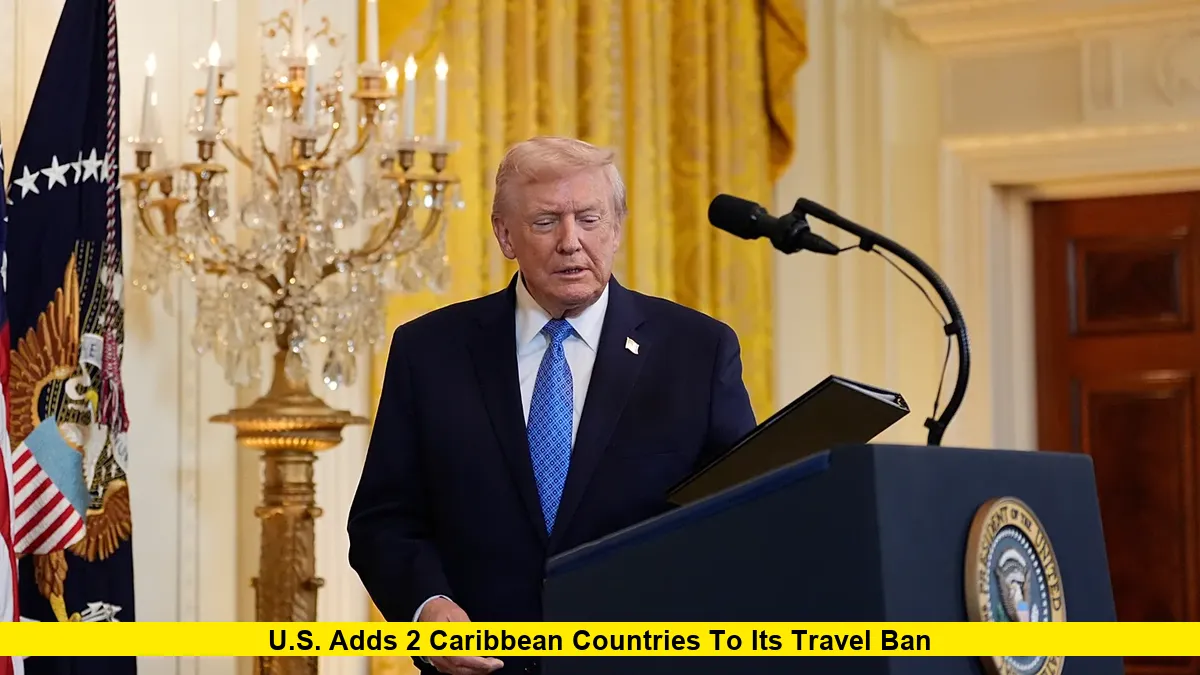
In a major foreign policy and immigration shift, U.S. Adds 2 Caribbean Countries to Its Travel Ban has emerged as one of the most discussed recent developments affecting international travel, diplomacy, and regional economics. This week, the United States announced an expansion of its travel restriction policy to include two Caribbean nations—Antigua and Barbuda, and Dominica—citing national security concerns tied to passport security, identity verification, and citizenship-by-investment programs. The move marks one of the most significant updates to U.S. travel policy this year, affecting travelers, governments, and businesses across the Western Hemisphere.
This long-form, in-depth article unpacks the new travel ban, explains how it works, explores reactions from Caribbean leaders and U.S. officials, assesses economic and human impacts, and outlines what travelers and policymakers should know as the restrictions take effect in early 2026.
What Happened: A New Chapter in U.S. Travel Restrictions
On December 16, 2025, the White House announced that Antigua and Barbuda and Dominica would be added to the list of countries subject to U.S. travel restrictions under the latest presidential proclamation. These measures are part of a broader expansion of travel bans that now cover nearly four dozen countries, including many in Africa, the Middle East, and the Caribbean.
The restrictions target nationals of Antigua and Barbuda and Dominica with partial travel bans that limit entry on most visa categories—such as tourist, business, student, and exchange visas—effective January 1, 2026. The U.S. government framed the decision as necessary to protect national security and public safety by addressing “deficiencies in screening, vetting, and information sharing” with these countries (verified today).
U.S. officials specifically pointed to concerns over passport security and citizenship-by-investment programs that allow individuals to obtain Caribbean citizenship without strict residency requirements. These programs, popular with international investors, have drawn scrutiny from U.S. authorities amid fears they could be exploited by bad actors seeking easier access to the United States.
How the Ban Works: Partial vs. Full Restrictions
The updated travel policy distinguishes between full travel bans and partial restrictions:
- Full travel bans completely bar citizens of certain countries from entering the United States under almost all visa categories.
- Partial travel bans, like those applied to Antigua and Barbuda and Dominica, suspend or limit entry for most nonimmigrant visa holders, though exceptions may apply to diplomats, lawful permanent residents, and travelers whose entry serves defined U.S. interests.
Both Antigua and Barbuda and Dominica fall under the partial restriction category, meaning their citizens will face new entry limitations unless they qualify for specific exemptions. These partial bans are part of a larger policy that now includes dozens of nations subject to varying levels of travel restriction based on U.S. assessments of security and documentation practices (verified today).
Why the Caribbean Was Targeted: National Security and Documentation Concerns
U.S. authorities have said the decision to include Antigua and Barbuda and Dominica stems from concerns about how these countries handle identity management and passport issuance. The White House cited weaknesses in how the two nations verify citizenship and share relevant data with U.S. agencies—issues officials say could undermine effective screening mechanisms at U.S. ports of entry.
Part of the scrutiny focuses on citizenship-by-investment (CBI) programs. These programs allow individuals to gain citizenship—and thus a powerful passport—through financial investment, often without requiring long periods of physical residence. While these programs generate revenue and foreign investment for participating nations, U.S. officials argue they can reduce the effectiveness of biometric and vetting protocols essential for assessing traveler risk.
Representatives from both Caribbean nations have pushed back, stating that existing security standards are robust and that they have cooperated with U.S. government officials on documentation and information sharing.
Economic Impact on the Caribbean: Tourism and Trade Concerns
The addition of Antigua and Barbuda and Dominica to the U.S. travel ban has sparked concern among Caribbean officials, business owners, and economists. Tourism is a primary revenue driver for both countries, particularly from U.S. travelers. Reduced tourist inflows could lead to significant economic losses, especially as these nations recover from the global disruptions of the past decade.
Local leaders worry that the travel ban will depress travel bookings, prompt airline route reductions, and deter investors. Air travel between the U.S. and Caribbean is a lifeline for regional economies, linking visitors to resorts, small-business hospitality services, and cultural attractions that contribute billions of dollars annually to local GDPs.
Beyond tourism, the restrictions may complicate educational and medical travel for Caribbean citizens who study or seek treatment in the United States. Families with relatives in the U.S. also face potential challenges in maintaining ties across borders.
Official Reactions: Caribbean Leaders Respond
Officials in Antigua and Barbuda and Dominica reacted swiftly to the announcement. Antigua and Barbuda’s prime minister criticized the U.S. interpretation of his country’s residency and citizenship programs, arguing that it does not reflect current legal frameworks and security practices. Efforts are underway to present evidence and work toward restoring standard visa access.
Similarly, Dominica’s government said it was actively engaging with U.S. authorities to clarify the scope of the restrictions and pursue solutions that safeguard the rights and interests of its citizens abroad. Both nations emphasized their willingness to cooperate with U.S. agencies to address concerns and reinforce confidence in their documentation and security systems.
Leaders in other Caribbean states have also voiced solidarity, warning that broader regional economic fallout could arise if neighboring countries face similar restrictions.
American Travelers and Citizens: What’s Next
For Americans planning travel to Antigua and Barbuda or Dominica, the immediate impact is limited. U.S. citizens can still travel visa-free to both destinations, and travel advisories currently rate both as safe for tourism with normal precautions. However, Caribbean nationals seeking to enter the United States will need to navigate new visa processes, possibly face additional screening, and may find some applications denied under the updated policy.
Students, business travelers, and families should monitor communications from U.S. consulates and embassies for guidance on how the new restrictions affect specific visa categories and entry requirements.
Broader Implications: U.S. Travel Policy and Global Relations
The decision to add Caribbean countries to the U.S. travel ban reflects broader shifts in U.S. immigration and security policy. With restrictions now spanning dozens of countries across multiple continents, critics argue the approach could strain diplomatic relations and hinder people-to-people connections that underpin economic and cultural exchange.
Supporters of the policy maintain that robust screening and stringent entry criteria are essential to national security, particularly in a world where global mobility and identity documentation practices vary widely.
While the United States has indicated it may reconsider or reverse restrictions if countries improve vetting systems and data sharing, the immediate message to affected nations is clear: compliance with U.S. standards will factor heavily in future travel policy decisions.
We want to hear from you—share your thoughts or experiences with these travel ban changes in the comments below and stay tuned for updates.