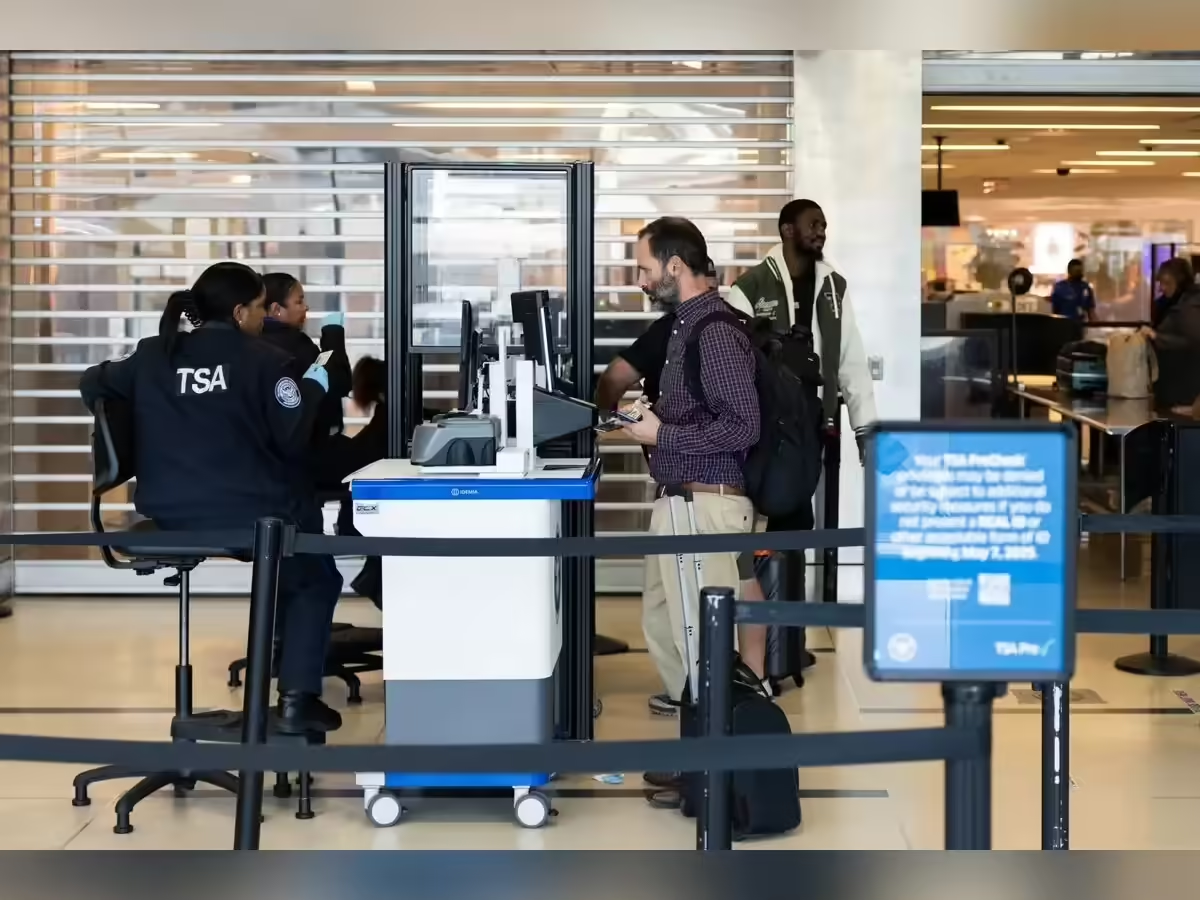
A major shift in domestic air travel is now underway across the United States, and it centers on enforcement measures tied to the real id act of 2005. Beginning February 1, 2026, travelers who arrive at airport security checkpoints without federally acceptable identification must complete a formal identity verification process and pay a $45 fee before proceeding. The change marks one of the most consequential updates to airport security procedures in years.
Millions of Americans fly domestically every month. If you plan to travel in 2026, these new requirements could directly affect your experience at the airport.
What Changed on February 1, 2026
The Transportation Security Administration has introduced a structured identity verification system for passengers who do not present a compliant driver’s license or other approved federal identification at the security checkpoint.
Travelers without acceptable ID must now use a digital verification platform known as ConfirmID. As part of that process, they are required to submit personal information and pay a $45 identity verification fee before being cleared to enter the screening area.
The verification approval remains valid for up to 10 days from the selected travel start date. During that window, travelers may fly without repeating the process. After 10 days, the verification expires, and a new payment is required for additional travel.
The agency recommends arriving earlier than usual if you expect to use this option at the airport.
Why This Enforcement Phase Matters
For years, federal identification standards have existed on paper while enforcement deadlines shifted. That changed in May 2025, when compliant identification became mandatory for boarding domestic commercial flights.
Now, the new fee structure adds financial consequences for travelers who still rely on non-compliant state IDs or who arrive at checkpoints without acceptable documents.
This marks a significant escalation in enforcement. Previously, travelers could undergo enhanced screening without a direct fee. Under the current framework, identity verification without compliant documentation now carries a cost.
Which IDs Allow You to Skip the Fee
Passengers can avoid the $45 charge entirely by presenting one of the following at the TSA checkpoint:
- A REAL ID-compliant driver’s license or state ID
- A valid U.S. passport
- A U.S. passport card
- Department of Defense identification
- Permanent resident card
- Trusted traveler program cards such as Global Entry, NEXUS, or SENTRI
- Federally recognized tribal identification
If you carry one of these documents, standard security procedures apply and no additional fee is assessed.
How ConfirmID Works
The ConfirmID system allows TSA officers to validate identity using biographical data when a traveler lacks acceptable ID.
Here’s how the process typically unfolds:
- The traveler is directed to a secure digital portal.
- Personal information is entered for identity matching.
- The $45 payment is processed electronically.
- A verification receipt is issued.
- The traveler presents that receipt at the security checkpoint.
Only digital payments are accepted. Cash transactions are not permitted at screening areas.
While the system is designed to streamline verification, processing times can vary. During peak travel periods, this could add significant wait time at checkpoints.
What Happens If Verification Fails
Payment of the fee does not guarantee successful identity confirmation.
If identity cannot be verified through available systems, the traveler may face additional screening measures or be denied access beyond the checkpoint. In such cases, airline rebooking policies would apply according to individual carrier rules.
That uncertainty is one reason officials continue to urge travelers to obtain compliant identification well before their travel date.
How to Check If Your License Is Compliant
Most compliant state-issued driver’s licenses display a star marking in the upper right corner. The exact design varies by state, but the presence of that star generally indicates federal compliance.
If your license does not have the marking, it may not meet current standards for domestic air travel.
Residents can upgrade through their state’s motor vehicle agency. The application typically requires:
- Proof of identity (such as a birth certificate or passport)
- Social Security documentation
- Two proofs of residency
Processing times differ by state, and appointments may be necessary.
The Federal Law Behind the Requirements
The standards driving today’s enforcement stem from the real id act of 2005, which established minimum security benchmarks for state-issued identification used for federal purposes.
The legislation was enacted to create consistent identification standards nationwide. It required states to verify identity documents more rigorously and incorporate security features into licenses and ID cards.
While implementation stretched across two decades due to state-level logistical challenges and deadline extensions, full enforcement for air travel is now active.
The addition of the identity verification fee represents the latest step in ensuring compliance.
Impact on Frequent Flyers
Business travelers and frequent flyers are unlikely to encounter major disruptions if they already use passports or compliant IDs. However, occasional travelers may be more vulnerable to unexpected costs and delays.
Families traveling together should confirm that every adult member carries acceptable identification. One non-compliant passenger could delay an entire group.
Travel advisors report that last-minute airport surprises have already increased during early enforcement stages. The new fee adds another layer of complexity.
Airports Preparing for Adjustment Period
Airports nationwide have updated signage and checkpoint messaging to alert passengers to the new requirements.
Customer service desks are fielding more identification questions than usual. Some airports are encouraging travelers to check ID status before arrival to reduce congestion at screening areas.
TSA staffing adjustments are also underway to accommodate additional identity verification traffic.
Financial Implications for Travelers
At $45 per verification, repeat travelers without compliant ID could face recurring costs.
For example:
- Two trips spaced more than 10 days apart would require two separate payments.
- Multiple family members without compliant ID would each pay individually.
- Missed flights due to processing delays could compound expenses.
Over time, upgrading to a compliant license may be more economical than repeated verification fees.
Broader Effects Beyond Airports
While most public attention focuses on airline travel, compliant identification is also required for access to certain federal buildings and facilities.
Individuals who visit military installations or secure federal offices may encounter similar enforcement standards.
The ripple effects extend beyond vacation travel, touching routine interactions with federal institutions.
Practical Steps to Avoid Disruption
If you have travel planned in the coming months, consider the following actions:
- Inspect your driver’s license for the federal compliance marking.
- Confirm your passport is valid and not nearing expiration.
- Schedule a DMV appointment promptly if you need an upgrade.
- Arrive at the airport earlier if using the identity verification option.
- Keep digital payment methods accessible if ConfirmID becomes necessary.
Preparation remains the simplest way to avoid stress.
Public Response and Compliance Trends
Since enforcement began in 2025, compliance rates have steadily increased as more Americans obtain compliant licenses.
However, a portion of travelers continues to rely on older state IDs, either due to convenience, cost concerns, or lack of awareness.
The introduction of a fee may accelerate adoption rates further as financial incentives shift toward compliance.
Looking Ahead
The identity standards now fully in effect represent the culmination of a long federal rollout.
Air travel in the United States has entered a new compliance era. Identification is no longer just a checkpoint formality. It is a regulated requirement with structured consequences for non-compliance.
For travelers, the message is straightforward: verify your documents before you verify your boarding pass.
Stay informed about travel security updates and share your experience navigating the new airport ID rules in the comments below.