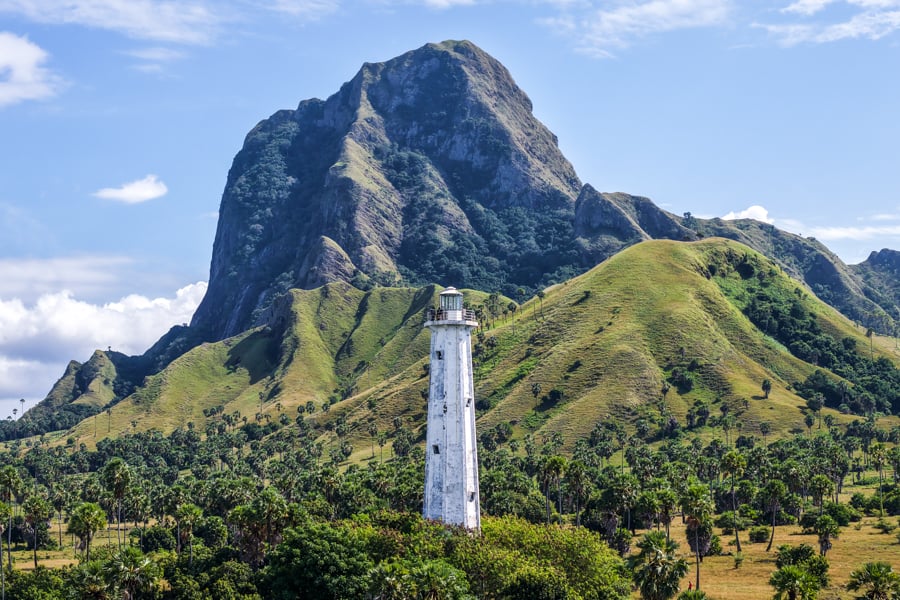
Visiting Jurassic Park Island In Flores has become one of the most talked-about travel experiences of 2025, especially as Nuca Molas Island—often nicknamed for its dramatic, prehistoric-looking landscapes—continues attracting international travelers looking for quieter alternatives to the crowded Komodo National Park. Recent travel guides published in October 2025 confirm that Nuca Molas remains fully open to visitors and is gaining global visibility as one of the most scenic islands off the coast of Flores .
With new regulations scheduled for nearby Komodo National Park in 2026, travelers are increasingly turning their attention to this striking island. Below is the most up-to-date guide on how to visit, where to stay, where to eat, and what to expect when traveling from the U.S.
What Is “Jurassic Park Island” in Flores?
The nickname refers to Nuca Molas Island, a small, rugged, steep-ridged island west of Flores. Tourism writers widely compare its cliffs and terrain to a real-life Jurassic setting, especially when viewed from the sea at sunrise. Unlike Komodo and Padar, Nuca Molas receives far fewer visitors, making it ideal for travelers seeking natural scenery without crowds.
Its popularity surged in late 2025 after new travel features highlighted its access routes, coastal views, and quiet, undeveloped atmosphere .
How to Visit the Island (2025 Travel Instructions)
Reaching the island often called “Jurassic Park Island” in Flores is part of what makes the trip memorable. The journey involves a combination of air travel, a scenic overland drive, and a short boat transfer. As of 2025, this route remains the primary and most reliable way for travelers—especially those coming from the United States—to access Nuca Molas. Each step is straightforward, and the process has not changed in 2025.
1. Fly to Labuan Bajo (Flores)
Your visit begins with a flight into Labuan Bajo (LBJ), the gateway town for exploring the western region of Flores. For U.S. visitors, the most common path involves booking an international flight into either Jakarta (CGK) or Bali (DPS), both of which offer frequent onward connections to Labuan Bajo. These domestic legs are served daily by multiple Indonesian carriers, making it easy to coordinate arrival times with the rest of your itinerary.
Labuan Bajo’s airport continues to operate year-round with consistent schedules, and it’s designed to handle the growing number of travelers exploring Flores. Flying in is not only the fastest option but also the most convenient way to begin your journey toward Nuca Molas.
2. Drive From Labuan Bajo to Dintor Village
Once you land, the next stage is an overland trip from Labuan Bajo to Dintor Village, which serves as the closest mainland point from which boats depart to the island. The drive takes approximately 4 to 5 hours, depending on traffic and road conditions. The route passes through rural landscapes, small settlements, and sections of coastline, giving visitors a look at the natural beauty and cultural life of Flores before they even reach the water.
Travelers can choose between renting a car or hiring a private driver. Both options are widely available in Labuan Bajo, and private drivers are often preferred because they know the roads well and can offer a smoother, more relaxed journey. The road is paved for most of the drive, though some winding and hilly sections require slower speeds. Because of this, it’s best to depart in the morning to ensure you reach Dintor with enough daylight for the boat transfer.
3. Take a Local Boat to Nuca Molas
When you arrive in Dintor, the final stage of the trip begins. Local fishermen and boat operators offer direct transfers to Nuca Molas, usually arranged on the spot or prebooked through a homestay or tour guide. The crossing is short—only 20 to 30 minutes—and provides stunning views of the island as its sharp ridgelines come into view.
Sea conditions around the island are generally calm during the dry season, but as always in maritime travel, departures may vary based on weather. Boats are typically small wooden vessels with canopies, ideal for short-distance transport.
Important Note for Visitors
Unlike the heavily regulated areas of Komodo National Park, Nuca Molas has no visitor quotas, mandatory ranger escorts, or restricted access zones. Travelers enjoy full freedom to explore the island’s viewpoints and hiking paths. However, as the island is undeveloped and unstaffed, visitors must bring their own water, food, and essentials.
Best Time of Year to Visit
Choosing the right season can make a noticeable difference in your experience, especially when traveling to a remote and fully natural destination like the island often referred to as “Jurassic Park Island” in Flores. The region follows the typical weather cycle of the Lesser Sunda Islands, a pattern that shapes everything from sea conditions to trail accessibility. Understanding these climate shifts will help you plan your visit with confidence.
Flores experiences two main seasons: a dry season and a rainy season. Verified climate data confirms that the dry season stretches from April through September, bringing steady sunshine, lower humidity, and calmer seas. These months are widely considered the best for travelers, particularly those relying on boat transfers or hoping to enjoy clear viewpoints for photography. During this time of year, mornings are typically bright, and visibility is high, which is ideal for hiking the island’s ridges and capturing its dramatic landscapes.
Within the dry season, the June to September period offers the most consistent conditions. This window provides slightly cooler temperatures, minimal rainfall, and gentler winds. It’s also the time when sea crossings from Dintor are most predictable, making the overall journey smoother for day-trip visitors. Travelers who prioritize hiking, drone photography, and panoramic views often choose these peak months for the most reliable weather.
The rainy season, spanning from December to March, brings heavier showers, higher humidity, and occasionally rougher seas. While the island remains accessible, boat travel can be more challenging, and trails may become slippery or muddy. Because the island has no facilities or shelters, the rainy season can feel less comfortable for long hikes or extended exploration.
For the most enjoyable and seamless experience, planning a trip during the dry months—especially between June and September—remains the recommended approach.
What to Expect When You Arrive
Reaching Nuca Molas—often highlighted for its striking, prehistoric atmosphere—immediately sets the tone for a quiet and immersive natural experience. The island is completely uninhabited and undeveloped, which means that what you see upon arrival is a raw, untouched landscape shaped only by wind, waves, and time. There are no permanent buildings, visitor centers, shelters, or commercial facilities, giving travelers an unobstructed sense of Flores’s wild beauty.
The island’s most defining features are its sharp, rolling hills, which rise steeply from the shoreline and form dramatic ridgelines. During the earlier part of the dry season, these hills appear vibrant green. By late dry season, they shift to deep gold, creating a striking contrast against the surrounding blue water. This natural color change is one reason photographers and drone users are drawn to the island.
Along the coastline, you’ll find clear-water coves that offer excellent swimming conditions when the sea is calm. These small inlets provide a peaceful place to relax after hiking or exploring the ridges. Because the island receives far fewer visitors than well-known destinations like Padar or Komodo Island, it’s common to have stretches of shoreline entirely to yourself.
Hiking is one of the main highlights of the visit. Trails are not formally marked, but natural pathways along the ridges lead to quiet viewpoints overlooking the sea and neighboring islands. These viewpoints are among the most rewarding aspects of Nuca Molas, delivering sweeping views without crowds, noise, or time limits. Many travelers compare the scenery to Padar Island, but with the added benefit of solitude.
Since the island is natural and unmanaged, visitors must take responsibility for their own comfort and safety. That includes carrying enough drinking water, sunscreen, snacks, and sturdy footwear. There are no vendors or services on the island, and no areas offering shade for long periods. To protect the environment, travelers should also be prepared to take all trash back with them.
A visit to Nuca Molas rewards those who appreciate nature in its purest form—quiet, scenic, and uninterrupted.
Where to Stay Near Jurassic Park Island (2025 Options)
Because Nuca Molas is completely uninhabited and untouched by development, travelers must stay on the nearby mainland. The two most practical options are Dintor Village, which sits closest to the island, and Labuan Bajo, the main tourism hub of western Flores. Each offers a very different experience, and your choice depends on whether you prefer convenience, comfort, or access to nightlife and tours.
Dintor Village: The Closest Access Point
Dintor is the mainland community located nearest to Nuca Molas, making it the most efficient base for early morning crossings. Day-trip reports and travel guides confirm that the village offers a handful of simple, locally run homestays. These accommodations are basic but reliable, providing clean rooms, home-cooked meals, and a direct connection to local boat operators.
Staying in Dintor means you can reach the island earlier in the day, often before other travelers arrive. This is a major advantage if you want to photograph the ridges in morning light or spend unhurried time exploring without boat-traffic noise. The setting is laid-back and community-oriented, giving visitors a closer look at rural life in western Flores. Electricity, Wi-Fi, and amenities may be limited, so this option is best suited to travelers comfortable with rustic stays.
Labuan Bajo: The Best for Amenities and Comfort
If you prefer more comfort, consistent services, and dining choices, Labuan Bajo is the ideal base. The town continues to grow as the main launching point for tourism across the region, and as of 2025, several verified hotels and resorts are fully operational.
Among the most popular is Seaesta Komodo Hotel & Hostel, known for its pool, rooftop space, modern design, and convenient location near the harbor. It remains a preferred choice for both backpackers and mid-range travelers in 2025.
For those seeking a luxury experience, Ta’aktana, a Luxury Collection Resort & Spa, stands out. Opened in May 2024, it offers upscale rooms, waterfront views, and high-end dining while staying fully active in 2025. It appeals to visitors who want a resort-style setting before exploring the wilder parts of Flores.
It’s worth noting that several large resorts, including Māua Labuan Bajo, are scheduled to open in 2026. However, they are not yet open and should not be considered when planning 2025 travel.
Labuan Bajo ultimately offers the widest range of choices—from boutique stays to upscale resorts—along with easy access to restaurants, tour operators, and boat charters. For travelers who want comfort and convenience before visiting Nuca Molas, it is the most practical and enjoyable base.
Where to Eat Near the Island
Since Nuca Molas is uninhabited and has no food stalls, restaurants, or facilities, all meals need to be planned before or after your visit. Travelers typically eat either in Dintor Village, the closest mainland point, or in Labuan Bajo, where most of the region’s well-established restaurants operate. Planning ahead is essential, especially for those taking early morning boats.
Dintor and Surrounding Villages
For visitors staying near Dintor, local homestays are the primary source of meals. These small, family-run accommodations prepare simple but fresh dishes that reflect daily life in rural Flores. Typical meals include rice, sautéed vegetables, local greens, and freshly caught fish from nearby waters. Portions are generous, and ingredients are sourced locally, which gives the food an authentic home-cooked flavor.
Dining in Dintor offers a quiet, community-centered experience. While menus are limited compared to Labuan Bajo, meals are prepared with care and usually arranged directly through your host. Because there are no independent restaurants in the village, travelers should inform hosts ahead of time if they plan to eat breakfast or dinner on-site.
Labuan Bajo Restaurants (Verified 2024–2025 Operations)
For greater variety and higher-quality dining, Labuan Bajo remains the best choice. The town has a growing food scene supported by tourism, and several restaurants operating consistently through 2024 and 2025 are popular with visitors.
One of the standout options is Dapur Tara, a well-known restaurant that specializes in traditional Flores wood-fired cooking. It offers cultural dinners, seasonal ingredients, and outdoor garden-style meals, making it a favorite among travelers seeking authenticity with comfort. Its continued strong reviews into 2025 make it a reliable pick for a pre- or post-island meal.
Beyond Dapur Tara, Labuan Bajo features numerous smaller eateries serving grilled seafood, Flores spice blends, and Indonesian staples such as nasi goreng, mie goreng, and chicken satay. Most are located near the harbor area, where travelers often gather after returning from day trips.
Labuan Bajo ultimately offers the most convenience and variety for anyone planning a full-day adventure to Nuca Molas. Eating here before departing—or returning for dinner afterward—is the best way to ensure a satisfying meal on the same day as your island visit.
Important 2025 Notices for Travelers
As of 2025, Nuca Molas remains an open-access island with no special regulations, visitor quotas, or ranger requirements, making it one of the more flexible destinations for those exploring the western region of Flores. However, travelers planning a broader itinerary that includes nearby Komodo National Park should be aware of upcoming changes that may influence crowd levels and travel patterns in the area.
Komodo National Park—separate from Nuca Molas—has officially confirmed that significant visitor limits will take effect in April 2026, including a cap of 1,000 daily visitors. These measures were designed to protect sensitive ecosystems and manage the rising number of tourists entering the park each year. While these new policies do not impact access to Nuca Molas, they have already begun shifting traveler interest toward alternative islands throughout 2025. As a result, Nuca Molas has seen a gradual increase in visitors during peak months, particularly those seeking less restricted, more peaceful natural settings.
Because Nuca Molas is undeveloped, unstaffed, and without facilities, visitors must take greater responsibility for their safety and comfort. Preparing adequately will ensure a smooth experience from the moment you step off the boat.
Here are the key recommendations for anyone visiting in 2025:
- Bring adequate water and sunscreen. The island has no shade structures, and the sun can be intense throughout the dry season.
- Wear strong footwear. Trails can be steep, uneven, and slippery, especially after light rainfall.
- Respect local communities when passing through Dintor. Travelers often move through this village to reach boat operators, so courteous behavior and support for local services are encouraged.
- Avoid leaving trash on the island. Since the island has no waste facilities, all garbage must be brought back to the mainland.
Following these simple guidelines helps preserve the island’s pristine condition while supporting responsible tourism practices across the Flores region.
Is the Island Safe to Visit?
Visitors can expect a generally safe experience when exploring Nuca Molas, making it an appealing option for travelers who want dramatic scenery without the wildlife-related risks found on nearby Komodo or Rinca Island. There are no dangerous animals on Nuca Molas, no resident Komodo dragons, and no reports of wildlife hazards that would require guided escorts or ranger supervision. This makes the island suitable for independent exploration, provided visitors take basic precautions.
The main safety consideration on the island involves the terrain itself. Nuca Molas is known for its steep ridges and sloping hillsides, which can be challenging in certain areas. For most moderately fit hikers, the trails are manageable, but footing can become unpredictable after rainfall. The grassy paths may get slick, and the incline can require careful navigation. Wearing sturdy shoes with good grip is strongly recommended.
The coastline around the island is typically calm during the dry season, but safety at sea still depends on traveling with an experienced boat operator. Hiring a local boat captain from Dintor is the standard and safest method of reaching the island. These operators understand shifting tides, seasonal currents, and the best landing points along the shoreline. Their knowledge helps ensure a smooth and secure crossing, especially for travelers unfamiliar with regional maritime conditions.
As the island has no facilities, staff, or emergency services, visitors should bring essentials such as water, sunscreen, and a first-aid kit. Staying aware of weather conditions, particularly during the rainy season, will further enhance safety.
With proper preparation and attention to terrain, Nuca Molas offers a peaceful and low-risk environment ideal for nature lovers and adventure travelers.
Why U.S. Travelers Are Now Adding It to Their Itinerary
In recent years, Nuca Molas has gained significant attention among U.S. travelers planning trips to Flores and the wider Komodo region. As tourism to Indonesia continues to rebound strongly throughout 2024 and 2025, Americans are increasingly seeking destinations that offer dramatic scenery without overwhelming crowds. Nuca Molas fits this demand perfectly, making it a rising highlight in many tailored itineraries.
One of the biggest reasons for its growing appeal is the island’s striking, prehistoric-style landscape. Its rugged ridgelines, sweeping bays, and elevated viewpoints offer a cinematic setting that rivals the more famous Padar Island. For travelers who prioritize photography or drone footage, Nuca Molas provides the same visual impact but with a quieter, more personal experience.
Accessibility also plays a major role. Unlike Komodo National Park, which requires ranger escorts and enforces strict visitor management rules, Nuca Molas remains open and unconstrained. Visitors can hike its ridges freely, explore at their own pace, and enjoy extended quiet moments overlooking the sea. This freedom appeals to American travelers who value flexible, independent exploration rather than structured group tours.
In addition, its relative lack of crowds is becoming a significant advantage. As Komodo National Park prepares for stricter visitor limits in 2026, travelers have started turning toward alternative destinations that offer the same dramatic views with fewer restrictions. Nuca Molas delivers exactly that: an off-the-beaten-path experience that still feels pristine.
Another factor behind the rising interest is the strong revival of U.S.–Indonesia travel. More Americans are visiting Bali, Flores, and other Indonesian destinations thanks to improved flight connectivity, increased media coverage, and renewed enthusiasm for nature-focused travel. As itineraries broaden beyond well-known tourist hubs, Nuca Molas naturally finds its place as an attractive addition.
For U.S. travelers seeking unspoiled views, solitude, and a taste of Flores’s raw natural beauty, this island has quickly become one of the most compelling stops in the region.
Final Thoughts
Nuca Molas has quickly become one of the standout natural attractions in western Flores, earning recognition for its rugged, Jurassic-style scenery and peaceful atmosphere. Its untouched hills, quiet viewpoints, and clear-water coves offer a rare opportunity to experience Flores in its most authentic form—without the visitor congestion seen in more established destinations nearby. Because the island remains undeveloped and freely accessible, travelers can explore at their own pace and enjoy the stunning landscape with minimal interruptions.
With tourism slowly increasing but still comfortably balanced, 2025 is an excellent time to visit. The region is preparing for significant changes in 2026, particularly within Komodo National Park, making this year a uniquely favorable window for travelers seeking tranquility, dramatic views, and fewer restrictions.
If you’ve visited Nuca Molas or plan to include it in your upcoming Flores adventure, feel free to share your experience or stay tuned for more updates.