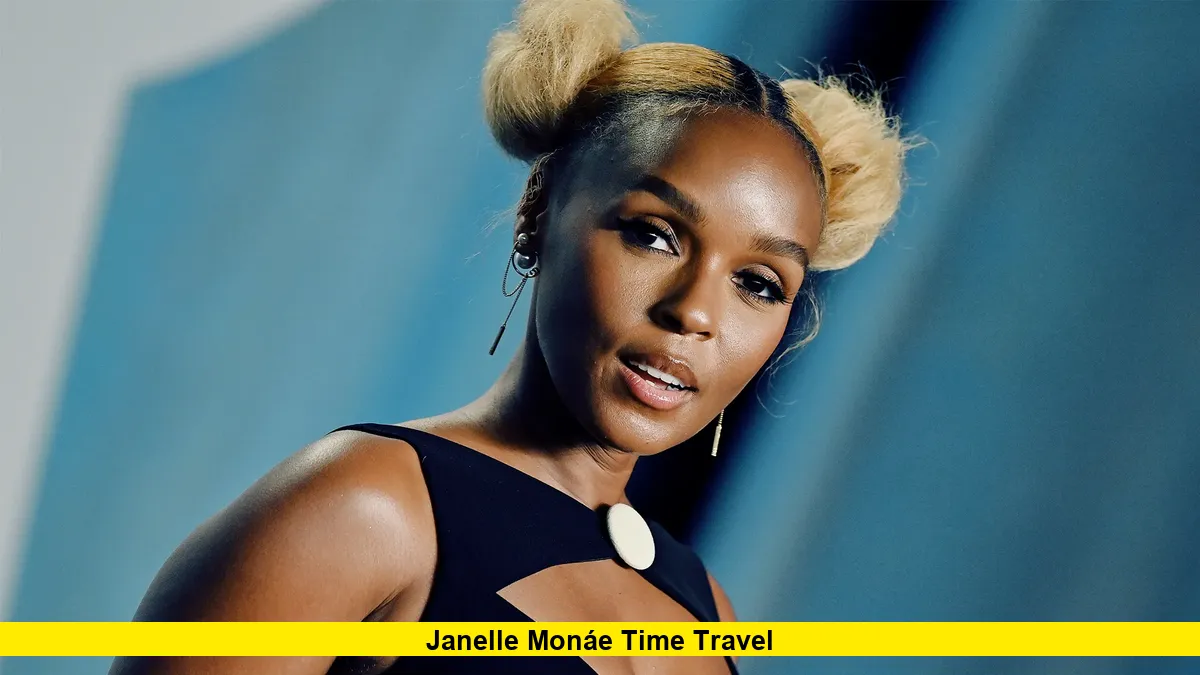
Janelle Monáe time travel claims have taken social media and entertainment headlines by storm this week. During a recent interview, the award-winning artist said she “travelled back to the 1970s” to watch David Bowie perform his iconic Ziggy Stardust and the Spiders from Mars show. The statement, made with complete composure, quickly went viral, sparking widespread discussion about whether Monáe’s words were literal, symbolic, or another example of her artistic storytelling.
A Remarkable Statement from Janelle Monáe
In the widely discussed conversation, Janelle Monáe shared that she “travelled back into the 1970s” and experienced Bowie’s legendary performance firsthand. She even described being backstage during the show and “returning to the 2000s” afterward.
Her interviewer appeared visibly surprised, asking for clarification, but Monáe stood by her statement, giving no hint that she was joking or exaggerating. For longtime followers of the artist, however, this moment fit perfectly into her well-established narrative of time, transformation, and Afrofuturist identity.
The Artistic Context Behind the Time Travel Claim
For years, Janelle Monáe has used themes of time travel, technology, and identity to shape her art. Her early albums introduced listeners to Cindi Mayweather, an android persona who travels between worlds and timelines while fighting for freedom and equality.
By connecting her new “time travel” story to a real historical event — David Bowie’s 1970s concert — Monáe deepened the link between her futuristic persona and her musical inspirations. Bowie himself was known for reinventing his image and exploring gender, space, and the future through his music. For Monáe, referencing him feels like paying homage to a creative ancestor.
Fans React to Janelle Monáe’s Revelation
Social media platforms have exploded with reactions since Monáe’s statement surfaced.
- Supportive Fans: Many users have embraced the claim as part of her artistic genius, calling it “pure Janelle energy” and celebrating her bold imagination.
- Skeptical Takes: Others believe she was speaking metaphorically, using time travel to express her creative connection with past artists like Bowie.
- Pop Culture Discussion: Clips from the interview have gone viral on TikTok, Instagram, and X (formerly Twitter), where users debate whether Monáe’s words reflect science fiction storytelling or a personal spiritual belief.
Regardless of interpretation, the moment has once again cemented her reputation as one of the most boundary-pushing artists of her generation.
Janelle Monáe’s Connection to Afrofuturism
To understand why Janelle Monáe time travel claims resonate so deeply, it’s essential to consider her ties to Afrofuturism — a creative movement that blends Black culture, technology, and speculative fiction.
Monáe has always placed her work within this framework, using futuristic visuals, alternate identities, and sci-fi storytelling to explore themes of liberation and identity. In this context, “time travel” may not be literal but symbolic — a journey across eras to reclaim cultural and creative history that has often been overlooked.
Her 2010 concept album The ArchAndroid and 2018’s Dirty Computer both built expansive worlds where time and identity blur. In interviews, Monáe has often said she wants her work to “leave space for transformation.” The new claim may be another example of her blending fantasy with lived experience to challenge traditional storytelling boundaries.
Cultural Impact of the Statement
Janelle Monáe’s declaration arrives at a time when discussions around nostalgia, technology, and creative reinvention are dominating pop culture. Her reference to David Bowie — a figure who reshaped what performance could mean — adds a layer of depth.
This isn’t the first time Monáe has blurred reality and art. Whether in her cinematic music videos, film roles, or public performances, she often constructs new realities that merge personal truth with artistic metaphor. For many fans, her time travel story feels like a continuation of that creative vision rather than a break from it.
Monáe’s Future Projects and Vision
During the same discussion, Monáe hinted at ongoing creative projects, including a screenplay that explores ideas of transformation, identity, and possibility — all central themes in her body of work.
She explained that developing these projects takes time and patience, saying she wants to “move beyond the mundane” and explore new ways of storytelling. It’s clear that Monáe’s fascination with time, both real and imagined, continues to influence her upcoming artistic ventures.
Her ability to make audiences question what’s real and what’s symbolic keeps her work at the forefront of cultural innovation. Whether her time travel comment was literal or conceptual, it perfectly captures the intersection of music, identity, and imagination that defines her career.
Janelle Monáe and David Bowie: A Creative Parallel
Monáe’s mention of David Bowie holds deeper meaning. Both artists have been praised for their fearless self-expression and reinvention. Bowie’s Ziggy Stardust era broke boundaries around gender, performance, and musical storytelling — themes that Monáe has also championed.
By saying she “travelled back” to see Bowie live, Monáe symbolically bridges generations of artists who dared to envision the future differently. It reinforces her role as a torchbearer of creative freedom, merging past innovation with futuristic artistry.
Public Discourse and Media Reflection
Following the interview, entertainment outlets and fans have analyzed every word of Monáe’s comment. Some see it as performance art — a deliberate blend of myth and truth. Others view it as a metaphorical statement about the timeless nature of art.
Either way, the buzz has elevated Monáe’s visibility just as she continues expanding into film, fashion, and activism. Her influence now extends well beyond music, making any statement she makes — even one about time travel — a topic of global conversation.
In an era where imagination often feels like the only true escape, Janelle Monáe’s time travel story reminds audiences that art can transcend time itself. What’s clear is that Monáe continues to redefine what it means to be an artist who moves seamlessly between past, present, and future.