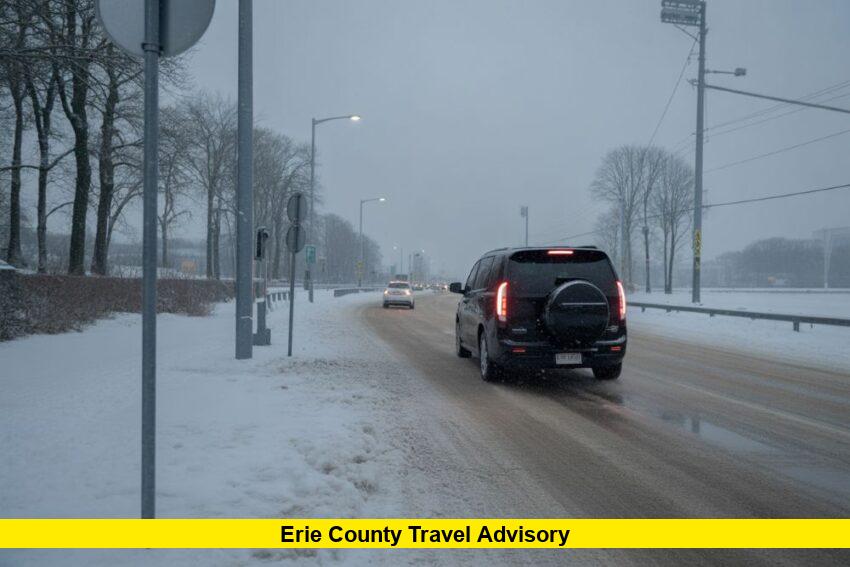
An official erie county travel advisory is in effect as a powerful winter storm system brings heavy snowfall, strong winds, and dangerous cold across Western New York, creating hazardous conditions for drivers, commuters, and anyone planning to travel through the region. Local officials are urging the public to avoid non-essential travel and take extra precautions as the storm continues to impact roads, public services, and daily life throughout Erie County.
The advisory reflects confirmed weather conditions that include intense lake-effect snow, blowing snow that sharply reduces visibility, and icy surfaces that increase the risk of accidents. These factors combined make travel unsafe in many areas, especially during peak snowfall periods and overnight hours.
Why the Erie County Travel Advisory Was Issued
County leaders enacted the travel advisory in response to a large winter system producing sustained snowfall and gusty winds across the Buffalo metro area and surrounding towns. Lake-effect bands have intensified, leading to rapid snow accumulation on highways, secondary roads, and residential streets.
Wind speeds have been strong enough to cause drifting snow, creating uneven road conditions and frequent white-out moments. These sudden visibility drops can disorient drivers and significantly increase stopping distances, making even short trips dangerous.
Officials emphasize that while roads remain open, the advisory serves as a formal warning that driving conditions are unsafe and may deteriorate quickly.
Current Weather Conditions Affecting Travel
The storm system continues to draw moisture from Lake Erie, fueling persistent snow showers and localized heavy bands. Some areas are experiencing snowfall rates that can cover road surfaces within minutes after plowing.
Temperatures remain well below freezing, allowing snow and ice to bond firmly to pavement. Combined with wind chill values, exposure outdoors can become hazardous in a short time, particularly for stranded motorists or pedestrians.
Visibility in open areas and along major expressways can drop suddenly due to blowing snow, even when snowfall intensity appears moderate.
What the Advisory Means for Drivers
The erie county travel advisory does not prohibit driving, but it strongly discourages all non-essential trips. Officials recommend postponing errands, appointments, and leisure travel until conditions improve.
For those who must travel, authorities advise:
- Reducing speed well below posted limits
- Increasing following distance
- Avoiding sudden braking or sharp turns
- Using headlights at all times
- Keeping fuel tanks at least half full
Motorists are also urged to carry winter emergency kits that include warm clothing, blankets, water, food, flashlights, and phone chargers in case of delays or breakdowns.
Public Transportation and Commuter Impact
Winter weather has the potential to disrupt bus, rail, and paratransit services throughout the county. Snow-covered platforms, reduced traction, and slower travel speeds may lead to delays or temporary route adjustments.
Commuters are encouraged to check service updates before leaving home and allow additional travel time. Employers across the region may also modify work schedules or allow remote work to reduce the number of vehicles on the road.
School and Business Operations
School districts and colleges in Erie County are monitoring the situation closely. Delayed openings, remote learning days, or temporary closures are possible depending on road conditions and snowfall intensity.
Many local businesses are adjusting operating hours, particularly during overnight and early morning periods when plowing operations are ongoing and visibility is lowest.
Emergency Services and Community Safety
Emergency responders remain fully staffed and on heightened alert. Snow-covered streets and reduced visibility can slow response times, making it even more important for residents to avoid unnecessary travel.
Community members are encouraged to check on elderly neighbors, individuals with mobility challenges, and anyone who may be vulnerable to power outages or heating issues during extreme cold.
Keeping sidewalks and building entrances clear of snow and ice also helps ensure safe access for emergency crews if assistance is needed.
How Long Conditions May Remain Hazardous
Forecasts indicate that lake-effect snow bands may persist for several days, with fluctuating intensity. Wind direction shifts could move the heaviest snow from one part of the county to another, meaning conditions may improve in one area while worsening in another.
Cold temperatures are expected to continue, limiting snowmelt and allowing icy patches to remain on untreated surfaces.
Officials will continue to evaluate road conditions and weather data to determine how long the advisory should remain in place.
Winter Travel Safety Tips
If you must be on the road during the advisory period, follow these safety guidelines:
Plan Ahead
Check weather and traffic conditions before leaving. Choose main roads that are more likely to be plowed and treated.
Drive Slowly
Lower speeds reduce the risk of skidding and allow more time to react to sudden obstacles or stopped traffic.
Stay Visible
Clear all snow from windows, mirrors, headlights, and taillights before driving.
Keep Communication Open
Inform someone of your route and expected arrival time. Carry a fully charged phone.
Be Prepared to Stop
If visibility drops significantly, pull over safely and wait for conditions to improve.
Home Preparedness During the Advisory
Residents are also advised to prepare their homes for extended winter conditions by:
- Stocking enough food and water for several days
- Ensuring heating systems are working properly
- Having extra blankets and warm clothing available
- Keeping batteries and flashlights on hand in case of power interruptions
Taking these steps can reduce the need to travel while conditions remain dangerous.
Staying Informed
Weather patterns associated with lake-effect snow can change rapidly. Monitoring local alerts, forecasts, and official announcements is essential for staying aware of new advisories or potential upgrades.
The erie county travel advisory serves as a reminder that winter in Western New York can become severe with little warning, and caution is the best defense against accidents and emergencies.
Stay safe, stay informed, and share your experience or updates in the comments so others can prepare and travel wisely.