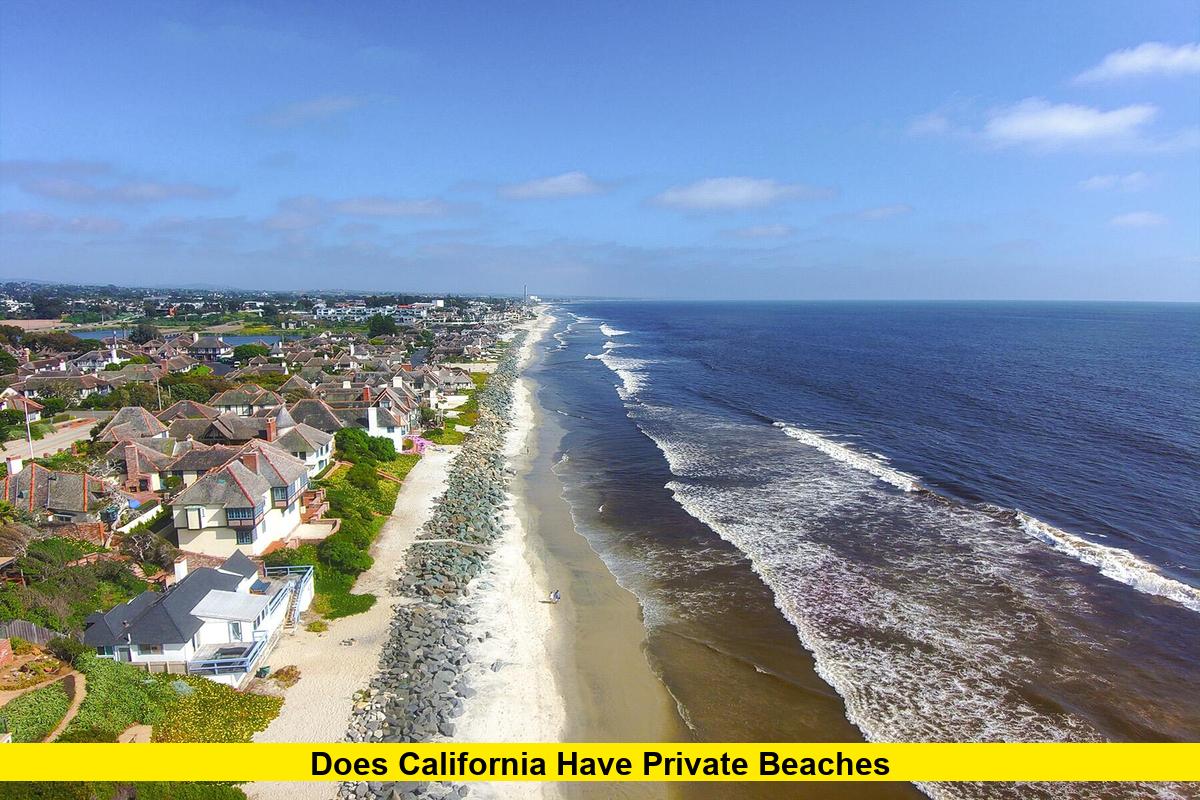
California’s coastline stretches over a thousand miles, offering some of the most iconic and scenic beaches in the world. From Malibu’s celebrity homes to the rugged cliffs of Big Sur, the Golden State’s beaches are a symbol of freedom and beauty. But as luxury mansions line the shore, many wonder: does California really have private beaches?
The answer is more complex than it seems. While certain beachfront properties are privately owned, California law guarantees that most of the coastline remains public. Let’s break down how beach ownership and access really work in California.
The California Coastal Act and Public Access
In 1976, the California Coastal Act was passed to protect the state’s beaches and ensure public access to the shoreline. The law established a simple but powerful rule: the public must have access to the coast, and new developments cannot block it.
The California Coastal Commission, created under this act, enforces these protections. It regulates development, monitors access points, and ensures that property owners do not illegally restrict entry to the beach. Thanks to this law, California’s coastline remains one of the most accessible in the United States.
In practical terms, everything below the mean high tide line—where the wet sand begins—is public land. That means anyone can walk, surf, or sunbathe there, even if the homes above the beach are privately owned.
What Is a “Private Beach” in California?
When people talk about “private beaches” in California, they usually refer to the land above the high tide line, which can be owned by individuals. Homeowners can control that portion of their property and restrict people from walking across it. However, they cannot legally block access to the public part of the beach, nor can they stop people from walking along the wet sand.
A truly “private beach,” where both the sand and water are off-limits to the public, does not officially exist under California law. What sometimes feels private is simply difficult to access because the surrounding land is owned or gated, not because the beach itself is off-limits.
Famous Beaches Often Labeled as Private
A few beaches in California have become famous for their access disputes and high-profile residents.
1. Carbon Beach (Malibu)
Known as “Billionaire’s Beach,” Carbon Beach runs in front of some of Malibu’s most expensive homes. For years, access was restricted, but after public advocacy and legal action, several public pathways have been opened. Visitors can now enjoy the sand legally—proving that even Malibu’s elite can’t privatize the shoreline.
2. Martins Beach (San Mateo County)
This beach became a symbol of the battle between public rights and private ownership. When a billionaire owner closed the only road to the beach, the public fought back. Courts ruled that the closure violated California’s coastal access laws. The case reinforced that beaches belong to everyone.
3. Hollister Ranch and Sea Ranch
These areas sit within private gated communities. While property owners control the land around the beaches, the shoreline remains public. However, getting there can be difficult without designated access routes. The state continues to negotiate for new pathways to open these beaches to everyone.
Legal Battles Over Beach Access
California has seen decades of legal battles over who can reach the beach. Courts consistently rule in favor of public access, citing the Coastal Act and the principle that the shoreline belongs to all Californians.
Property owners who block paths or gates to the beach without a permit can face hefty fines. In some cases, the state has ordered them to reopen public access points. These decisions have set important precedents, ensuring that no amount of wealth or property ownership can erase the public’s right to the ocean.
The “mean high tide line” remains the defining boundary: everything below it is for everyone. Above it, property owners have more control—but they cannot stop the public from reaching the shore through established routes.
How to Access Hidden or Hard-to-Reach Beaches
California’s coastline is full of hidden gems that may appear private at first glance. The key is knowing how to find legal public access points.
Here are a few simple tips:
- Look for official public access signs or pathways, especially in Malibu, Santa Barbara, and San Diego.
- Use state or local maps that mark coastal trails and entryways.
- Avoid crossing through clearly marked private property or locked gates.
- Remember that once you’re below the wet sand line, you’re on public ground.
Even if a beach seems tucked behind luxury homes or cliffs, there’s often a legal way to get there—sometimes through narrow pathways, staircases, or state park trails.
The Future of Beach Access in California
California continues to face challenges in balancing private property rights with the public’s right to the coast. Rising sea levels, coastal erosion, and expanding development all put pressure on available beach space.
The state is working to secure new public easements and maintain existing pathways. Environmental groups and community organizations regularly advocate for stronger enforcement of access laws. Meanwhile, courts continue to affirm that the beach belongs to everyone, regardless of who owns the land nearby.
In the years ahead, technology and better mapping are expected to make it even easier for Californians and visitors to find and enjoy the state’s hidden beaches. The spirit of the Coastal Act—equal access for all—remains central to California’s identity.
Conclusion
So, does California have private beaches? Not in the traditional sense.
While wealthy homeowners can own land that borders the beach, the sand and sea themselves are open to the public. California law makes sure that no one can truly “own” the coastline.
However, access can still be limited by geography, development, or blocked pathways. Knowing your rights—and where legal access points exist—ensures you can enjoy the state’s breathtaking beaches responsibly and confidently.
California’s coast is one of its greatest treasures. Thanks to strong laws and ongoing public advocacy, it remains exactly what it was meant to be: a shoreline for everyone.