Tucked away in the vibrant heart of Greenwich Village, Abingdon Square Park New York: A Hidden Urban Oasis offers a serene escape from the city’s relentless pace. This charming park, one of New York’s oldest, blends rich history, thoughtful design, and community spirit. In this blog, we’ll explore its origins, unique features, cultural significance, and the events that bring locals together. From its lush gardens to the iconic Doughboy statue, we’ll uncover why this quarter-acre gem remains a beloved landmark. We’ll also answer common questions and share tips for visitors, ensuring you experience this urban oasis at its finest.
A Storied Past Rooted in Greenwich Village
The park’s early years reflected the simplicity of early 19th-century urban design. It was a quiet green refuge amid a still-developing Greenwich Village — little more than a handful of trees, a few benches, and straight gravel paths that cut through the small triangular plot. Its modest design mirrored the understated charm of the neighborhood at the time, which was transitioning from rural farmland into a growing residential community for merchants and tradesmen seeking space away from the dense city center.
By the 1880s, however, New York City was changing rapidly. Industrialization and population growth had transformed Manhattan into a bustling metropolis, and small parks like Abingdon Square were increasingly seen as essential public assets. Mayor Abram Stevens Hewitt, a progressive civic leader, believed that access to green spaces was vital for both public health and social harmony. His administration launched a movement to beautify and modernize the city’s smaller parks, emphasizing both functionality and aesthetic value.
As part of this initiative, Hewitt commissioned two of the era’s leading figures in landscape design: Calvert Vaux and Samuel Parsons Jr. Vaux, already celebrated as the co-designer of Central Park and Prospect Park, brought with him a deep understanding of how to create naturalistic beauty in confined urban settings. Parsons, his collaborator and later the city’s Parks Superintendent, shared Vaux’s philosophy that even the smallest green spaces could serve as sanctuaries of calm in the urban environment.
Together, they reimagined Abingdon Square Park through the lens of the picturesque English garden style, a design approach that emphasized organic shapes, lush plantings, and gentle curves rather than strict geometric lines. The redesign replaced the rigid paths of the original park with softly winding walkways that encouraged slow movement and reflection. At the heart of the design, they introduced a central plaza, serving as both a visual anchor and a gathering space for residents.
The new layout fostered a sense of intimacy unusual for such a small park. Low shrubs, ornamental trees, and flowering plants were carefully selected to create seasonal variety and visual depth. Vaux and Parsons also paid close attention to sightlines — ensuring that from nearly any point within the park, visitors could enjoy framed views of trees, open sky, and the cast-iron fence that bordered the grounds.
This transformation marked a turning point in Abingdon Square’s history. What had once been a simple, utilitarian plot of land evolved into a carefully curated urban retreat, embodying the 19th century’s growing appreciation for nature’s restorative power. It became not just a park, but a living piece of art — a small but elegant statement that even in the heart of an expanding city, beauty and tranquility could thrive.
A Design That Captures Serenity
The design of Abingdon Square Park in New York — often described as a hidden urban oasis — masterfully blends history, artistry, and practicality within a remarkably small footprint. Spanning just a quarter of an acre, the park’s triangular layout sits gracefully at the intersection of Eighth Avenue, Hudson Street, Bank Street, and West 12th Street, right in the heart of Greenwich Village. Despite its modest size, every inch of the park is carefully orchestrated to create a sense of calm and spaciousness amid the dense cityscape that surrounds it.
At the park’s center lies a gently contoured lawn, a green focal point bordered by an abundant array of plantings. More than 40 varieties of trees, shrubs, and flowers bring color and texture to the space throughout the seasons. Boxwood hedges outline the pathways with timeless structure, while ferns, hydrangeas, and knockout roses infuse the park with softness and fragrance. In spring and summer, blooms spill over the edges of the flowerbeds, creating a painterly effect that feels both curated and natural.
Rising above these plantings are thirteen stately London Plane trees, known for their durability and graceful mottled bark. These giants form a leafy canopy that shields visitors from the sun in summer and transforms into a fiery mosaic of color in autumn. Complementing them are smaller ornamental trees such as Japanese Dogwood, Red Cedar, and Flowering Cherry, which add layered height and seasonal interest — from delicate spring blossoms to evergreen winter silhouettes.
The park’s curved bluestone pathways are among its most distinctive features. Unlike rigid city sidewalks, these paths flow organically through the space, encouraging slow, reflective movement rather than hurried passage. Each bend reveals a new view — a shaded bench, a flowering border, or a glimpse of the surrounding Village architecture — reminding visitors of the park’s intentional rhythm and harmony.
Adding to its historic character are decorative cast-iron light poles, modeled after Victorian-era designs. Their gentle glow at night casts a nostalgic ambience, evoking a bygone New York while ensuring safety and warmth for evening visitors. The park’s signature wrought-iron fencing, dating back to the 19th century, continues to frame the space elegantly, a reminder of its long lineage of civic design.
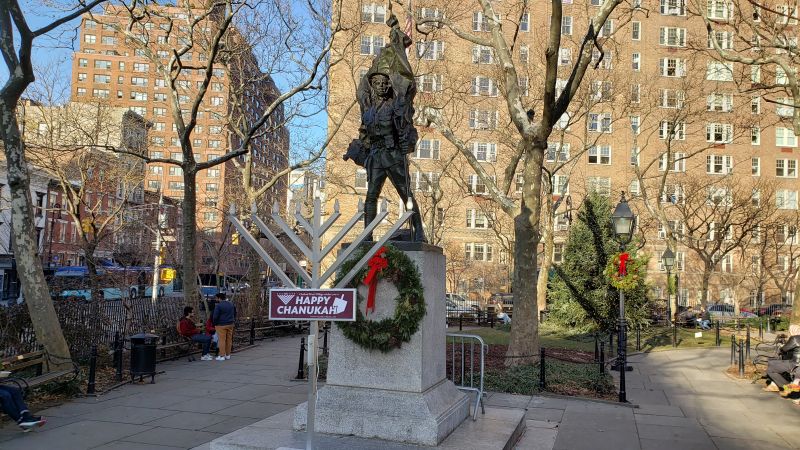
A significant moment in the park’s evolution came with its 2004 renovation, led by the Abingdon Square Conservancy in collaboration with the New York City Parks Department. The project sought to restore the park’s 19th-century charm while enhancing its functionality for modern use. Benches along the exterior fence were removed to open space for a weekend Greenmarket, drawing neighborhood residents to shop for fresh produce and flowers. At the same time, the park’s beloved World War I “Doughboy” statue — a bronze tribute to local soldiers — was relocated to the southern entrance, where it now stands proudly as a visible and welcoming symbol of remembrance.
The renovation also emphasized durability and sustainability. New plantings were chosen for their resilience to pollution and variable weather, ensuring that the park’s lush appearance could thrive year-round with minimal maintenance. The restored pathways and lighting further reinforced the park’s identity as both a historic landmark and a vibrant community gathering place.
Today, Abingdon Square Park remains a rare blend of beauty and intimacy. Morning joggers, local artists, and nearby residents all share its shaded benches and flower-lined paths, finding in its quiet design a small sanctuary that feels far larger than its dimensions suggest. Every design choice — from the layout of the walkways to the placement of each tree — reflects a commitment to serenity, continuity, and the enduring charm of Greenwich Village itself.
The Doughboy Statue: A Symbol of Sacrifice
Standing sentinel at the southern entrance of Abingdon Square Park, the Abingdon Square Doughboy serves as both an artistic landmark and a solemn tribute to the neighborhood’s fallen heroes. This bronze sculpture, created by noted artist Philip Martiny and unveiled in 1921, honors the men of Greenwich Village who served in World War I. The statue captures the enduring spirit of American courage — a young soldier gripping an unfurled flag with steadfast determination, his expression a blend of valor, fatigue, and resolve.
The Doughboy’s presence transforms the park from a simple green refuge into a space of remembrance. When it was first unveiled, the event drew over 20,000 spectators, a testament to the community’s deep sense of loss and pride in the aftermath of the Great War. Governor Alfred E. Smith, a prominent figure in New York’s political landscape, attended the ceremony, underscoring the statue’s significance as a citywide memorial. Local veterans, families of servicemen, and neighborhood residents gathered shoulder to shoulder, uniting in a moment of shared gratitude for those who had given their lives in defense of freedom.
Philip Martiny’s sculptural style is characterized by its emotional realism and attention to human expression, qualities that make the Abingdon Square Doughboy particularly poignant. Unlike more formal monuments, Martiny’s soldier is not idealized — he is weary but resolute, representing the everyday bravery of citizen soldiers. The artist, who had contributed to major architectural works including the New York Public Library and the U.S. Custom House, imbued the figure with movement and humanity, ensuring it would resonate with viewers across generations.
The statue is one of eight doughboy memorials across New York City, each commemorating local communities that sent young men to the battlefields of Europe. Yet, the Abingdon Square Doughboy stands out for its intimate scale and its placement within a neighborhood park rather than a grand civic plaza. This proximity to daily life — surrounded by trees, flowers, and benches — allows visitors to encounter history not as a distant story, but as part of their lived environment.
By the early 1990s, time and weather had taken their toll on the century-old bronze. Recognizing its historical importance, the city undertook a conservation effort in 1993, carefully restoring the statue’s patina and structural integrity. Then, during the 2004 renovation of Abingdon Square Park, the Doughboy was strategically relocated to its current position at the southern entrance. This move enhanced both its visibility and symbolic impact, allowing it to stand as a welcoming beacon — a guardian of memory greeting everyone who enters the park.
Today, the Doughboy remains the emotional heart of Abingdon Square Park. Visitors often pause before it in quiet reflection, laying flowers or tracing the engraved names of the fallen. The statue continues to serve as a site of remembrance during Memorial Day and Veterans Day ceremonies, when local residents gather to honor not only those lost in World War I but all who have served since.
The Abingdon Square Conservancy, a nonprofit organization that oversees the park’s maintenance and programming, plays a crucial role in preserving this legacy. Through regular care of the statue and the landscaped gardens surrounding it, the Conservancy ensures that the Doughboy endures as more than a monument — it remains a living symbol of community pride, sacrifice, and resilience.
In a city that constantly evolves, the Abingdon Square Doughboy stands as a steadfast reminder that history, memory, and gratitude still have a place in the heart of modern New York.
A Hub for Community and Culture
Today, Abingdon Square Park New York: A Hidden Urban Oasis stands as far more than a patch of greenery — it is the beating heart of Greenwich Village’s community life. Despite spanning only a quarter of an acre, the park has evolved into a place where urban bustle gives way to connection, creativity, and local pride. Its charm lies not just in its design or history, but in how it continually brings people together in the spirit of neighborhood fellowship.
At the center of this communal rhythm is the Abingdon Square Greenmarket, a beloved Village tradition that has taken root every Saturday since 1994. Each weekend, the park’s edges come alive as local farmers, fishmongers, and artisans line the curbs with vibrant displays of produce and goods. The air fills with the scent of fresh herbs, baked breads, and seasonal flowers, creating a market atmosphere that feels both old-fashioned and distinctly New York.
Residents stroll in with coffee cups in hand, chatting with farmers who know them by name — a rare personal touch in a fast-paced city. Tables brim with heirloom tomatoes, just-caught fish, farm-fresh eggs, artisanal cheeses, and organic pastries, drawing loyal shoppers who return week after week. For many Village residents, a Saturday morning at Abingdon Square has become a ritual, one that sustains not only local agriculture but also the social fabric of the neighborhood itself.
Beyond the market, the park has become a vibrant cultural hub through the stewardship of the Abingdon Square Conservancy. Throughout the year, the Conservancy curates a calendar of events that celebrate the park’s heritage and seasonal beauty. Each spring, the park bursts into color with a spectacular tulip display, an annual hallmark that draws photographers, tourists, and locals alike. The bloom culminates in the Tulip Celebration, an elegant cocktail gathering for Conservancy members and supporters, where neighbors toast to another year of community care and shared commitment to public space.
As the seasons turn, the park’s atmosphere transforms with them. In autumn, Abingdon Square embraces its playful side with a family-friendly Halloween Pumpkin Patch, where carved jack-o’-lanterns glow among the flowerbeds and costumed children parade through the winding paths. In winter, the park glimmers with holiday lights and wreaths, offering a cozy, festive escape that brightens even the coldest evenings.
When warmer days return, the park becomes an open-air venue for outdoor concerts, yoga sessions, poetry readings, and art shows. Local musicians perform acoustic sets under the shade of the London Plane trees, while artists and writers use the tranquil surroundings as inspiration for their work. These gatherings reflect the Village’s enduring identity as a center of creativity — a place where art, nature, and community naturally intertwine.
The inclusivity of these events is what gives Abingdon Square its distinctive character. Visitors from all walks of life — young families, long-time residents, artists, and newcomers — mingle with ease, finding common ground in this shared space. Whether attending a cultural performance or simply enjoying a quiet morning stroll, everyone becomes part of the park’s living story.
Ultimately, Abingdon Square Park endures as a microcosm of Greenwich Village itself — diverse, dynamic, and deeply rooted in tradition. Its enduring vitality lies in how it continues to adapt to modern life without losing its soul. From farmers’ market mornings to candlelit holiday evenings, it remains a sanctuary where nature meets culture, and where the heart of the Village beats strongest — in community, creativity, and connection.
The Role of the Abingdon Square Conservancy
The Abingdon Square Conservancy plays a pivotal role in maintaining the park’s beauty and functionality. As a nonprofit reliant on private donations, it employs a horticulturalist to design seasonal plantings and a groundskeeper to keep the park pristine. Working in partnership with the New York City Parks Department, which handles trash collection and gate operations, the Conservancy ensures the park remains a welcoming oasis. Its efforts earned a Village Award from the Greenwich Village Society for Historic Preservation in 2005, recognizing the 2004 renovation’s success.
The Conservancy’s commitment extends beyond maintenance to community engagement. By organizing events and advocating for the park’s preservation, it reinforces Abingdon Square’s status as a historic landmark. Visitors can support these efforts by donating or attending events, ensuring the park continues to thrive for future generations.
Why Abingdon Square Stands Out
In a city defined by motion, Abingdon Square Park offers a rare and restorative pause — a space where the pace of New York momentarily slows. What makes it so remarkable is not its size but its intimacy. At just a quarter of an acre, it embodies a distinctly human scale that larger parks cannot replicate. Here, every bench, tree, and pathway feels within reach, encouraging casual encounters and quiet moments of reflection that nurture a genuine sense of neighborhood connection.
Unlike the sweeping expanses of Central Park or Washington Square Park, Abingdon Square thrives on closeness. Its compactness fosters community — you’re likely to see the same joggers, dog walkers, and readers day after day. This sense of familiarity turns the park into an outdoor living room for Greenwich Village residents, where greetings are exchanged as naturally as the rustling of leaves. It’s this subtle rhythm of shared space that gives the park its enduring warmth.
The absence of vehicular traffic around the park is another defining feature that heightens its tranquility. Nestled within Greenwich Village’s web of pedestrian-friendly streets, Abingdon Square enjoys a degree of calm rare in Manhattan. The gentle hum of conversation, birdsong, and the occasional strum of a street musician replace the constant honking and engine noise found elsewhere in the city. Visitors immediately notice the difference — a peacefulness that feels almost out of time, yet perfectly in tune with the Village’s character.
Adding to its charm is the park’s prime location within the West Village, one of Manhattan’s most storied and picturesque neighborhoods. Just a short walk away lie landmarks that define New York’s cultural identity, including the Stonewall Inn, a symbol of LGBTQ+ history and resilience, and the tree-lined streets dotted with cafés, bookshops, and art galleries. Whether you’re wandering on a sunny afternoon or tracing the Village’s bohemian heritage, Abingdon Square offers the perfect interlude — a serene pocket between the city’s cultural and culinary highlights.
Despite its urban surroundings, the park also sustains a surprising amount of wildlife. In the mornings, songbirds flit between the branches of the London Plane trees, their calls mingling with the chatter of early visitors. Squirrels scamper across the grass or dart along the iron fence, adding playful energy to the calm landscape. These small, everyday encounters with nature remind visitors that even in one of the world’s busiest cities, life thrives quietly amid the greenery.
For locals and travelers alike, the park’s greatest gift lies in its simplicity. It asks nothing more of you than to pause. You might sit beneath the dappled shade of a tree with a book, sip a coffee from a nearby café, or simply watch the afternoon unfold. During community events or early morning solitude, Abingdon Square encourages mindfulness — a reconnection not only with nature, but with the slower, more reflective side of city life.
Ultimately, Abingdon Square Park stands out because it embodies balance. It is small yet significant, tranquil yet alive with energy, historic yet ever-evolving. In a metropolis that never stops moving, this little triangle of green continues to remind New Yorkers and visitors alike that peace, beauty, and belonging can exist right in the heart of the city — if only you know where to look.
Tips for Visiting Abingdon Square Park
To make the most of your visit to Abingdon Square Park New York: A Hidden Urban Oasis, consider these tips. Arrive early on Saturdays to browse the Greenmarket before crowds gather, and bring cash for vendors who may not accept cards. The park is open daily from dawn to dusk, with gates locked at night for safety. Benches along the paths offer prime spots for people-watching or relaxing, but they fill up quickly on weekends.
If you’re traveling with children, note that the park lacks a dedicated playground, though a small play area with swings was added in the 1930s. For a deeper dive into the park’s history, look for historical markers near the Doughboy statue. Pair your visit with a stroll through the West Village’s cobblestone streets, where you’ll find charming bookstores, boutiques, and eateries that complement the park’s laid-back vibe.
A Green Legacy in the Heart of the City
The enduring magic of Abingdon Square Park lies in its perfect balance — a seamless blend of history, nature, and community that continues to define its identity. From its 18th-century origins as part of Sir Peter Warren’s colonial estate to its 21st-century role as a beloved neighborhood landmark, the park has evolved gracefully with the city around it. Yet through every transformation, it has retained the charm and intimacy that make it such a vital piece of Greenwich Village’s soul.
Every corner of the park tells a story. The cast-iron fence recalls the craftsmanship of the 1830s, while the winding bluestone paths speak to 19th-century design ideals shaped by visionaries like Calvert Vaux and Samuel Parsons Jr. The bronze Doughboy statue stands as a solemn reminder of sacrifice and resilience, connecting today’s visitors to generations past. These layers of history coexist effortlessly with the park’s modern vitality — from weekend markets to springtime celebrations — creating a living timeline of urban evolution.
At the heart of this continuity is the Abingdon Square Conservancy, a dedicated nonprofit that cares for the park with remarkable attention to detail. Its stewardship ensures that the gardens remain lush, the trees healthy, and the public events welcoming to all. Seasonal plantings transform the park throughout the year, offering bursts of color in spring, cool shade in summer, and festive lights in winter. Behind this beauty lies a deeper purpose — to keep the park accessible, sustainable, and rooted in the values of community-driven preservation.
For locals, Abingdon Square is a daily companion — a place to sip morning coffee, chat with neighbors, or enjoy the rhythm of city life in peace. For visitors, it’s a delightful discovery: a pocket of calm that encapsulates the West Village’s quintessential charm. Here, among the trees and flowers, the noise of Manhattan fades just enough for reflection, conversation, or a quiet moment of gratitude.
As you wander its curving paths or pause beside the Doughboy statue, it’s easy to sense the deeper pulse of the neighborhood — one that honors its history while embracing the present. Abingdon Square Park is more than a green space; it’s a living legacy, proof that even in one of the world’s most dynamic cities, tradition and tranquility can endure side by side.
The next time you find yourself in the West Village, step through the park’s historic iron gates. Take a seat beneath the London Plane trees, listen to the hum of the Greenmarket, and let the serenity of Abingdon Square wash over you. In that brief, timeless moment, you’ll understand why this small triangular haven continues to capture the heart of New York — one visitor, one season, and one story at a time.
Let’s Summarize…
Abingdon Square Park, established in 1831, is a historic gem in Greenwich Village, offering a tranquil escape with lush gardens, winding paths, and the iconic Doughboy statue. Redesigned by Calvert Vaux, it hosts vibrant community events like the Greenmarket and seasonal festivals, maintained by the Abingdon Square Conservancy. Its intimate design and rich history make it a cherished urban oasis, inviting visitors to connect with nature and neighborhood spirit.
FAQs
What is the history of Abingdon Square?
The park was established in 1831 on land from Sir Peter Warren’s estate, named for his daughter Charlotte, and redesigned in the 1880s by Calvert Vaux. It’s one of NYC’s oldest parks.
What is the name of the rectangular park in New York that is a famous landmark?
Washington Square Park, located nearby in Greenwich Village, is a famous rectangular park known for its iconic arch and cultural significance.